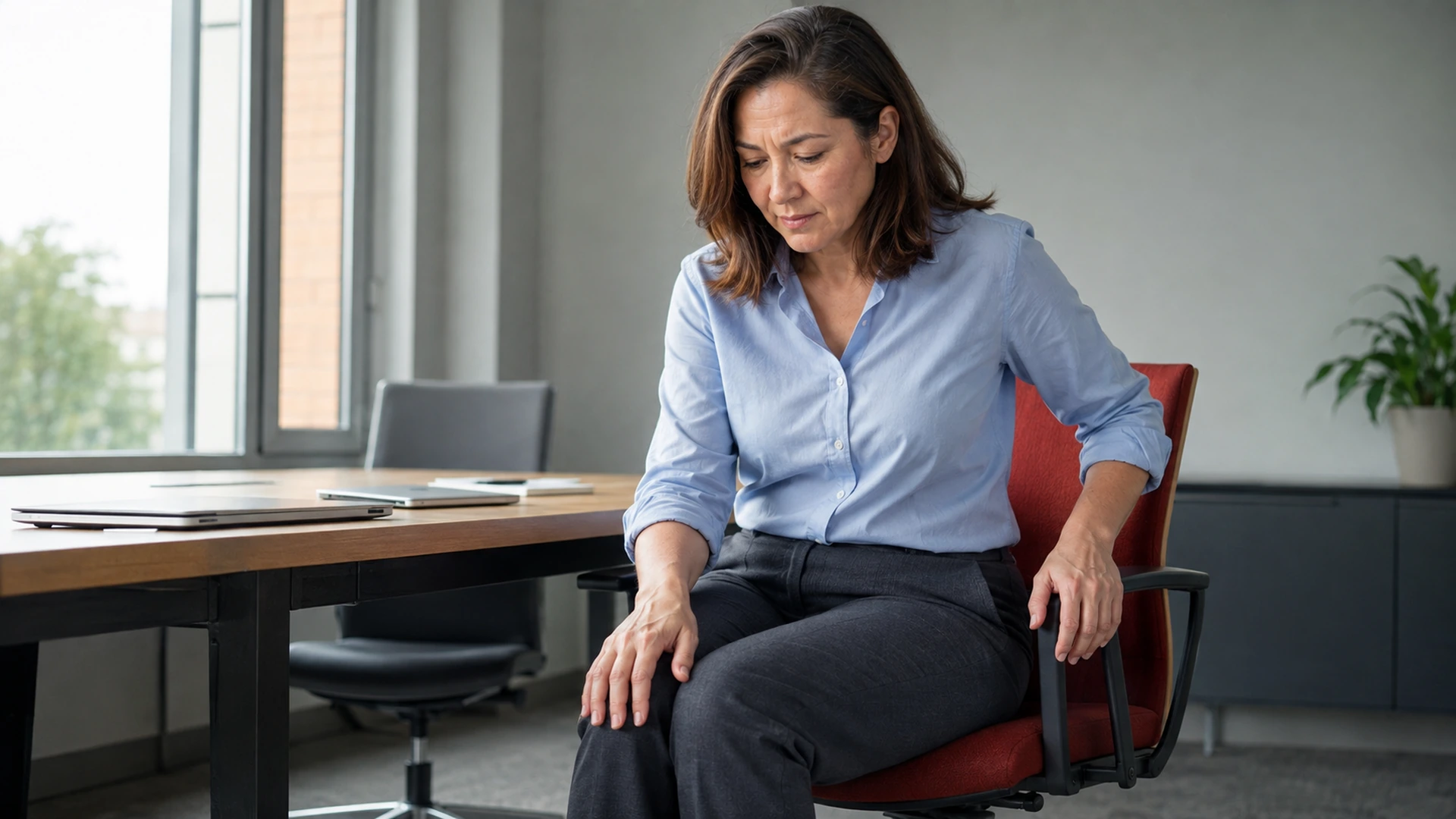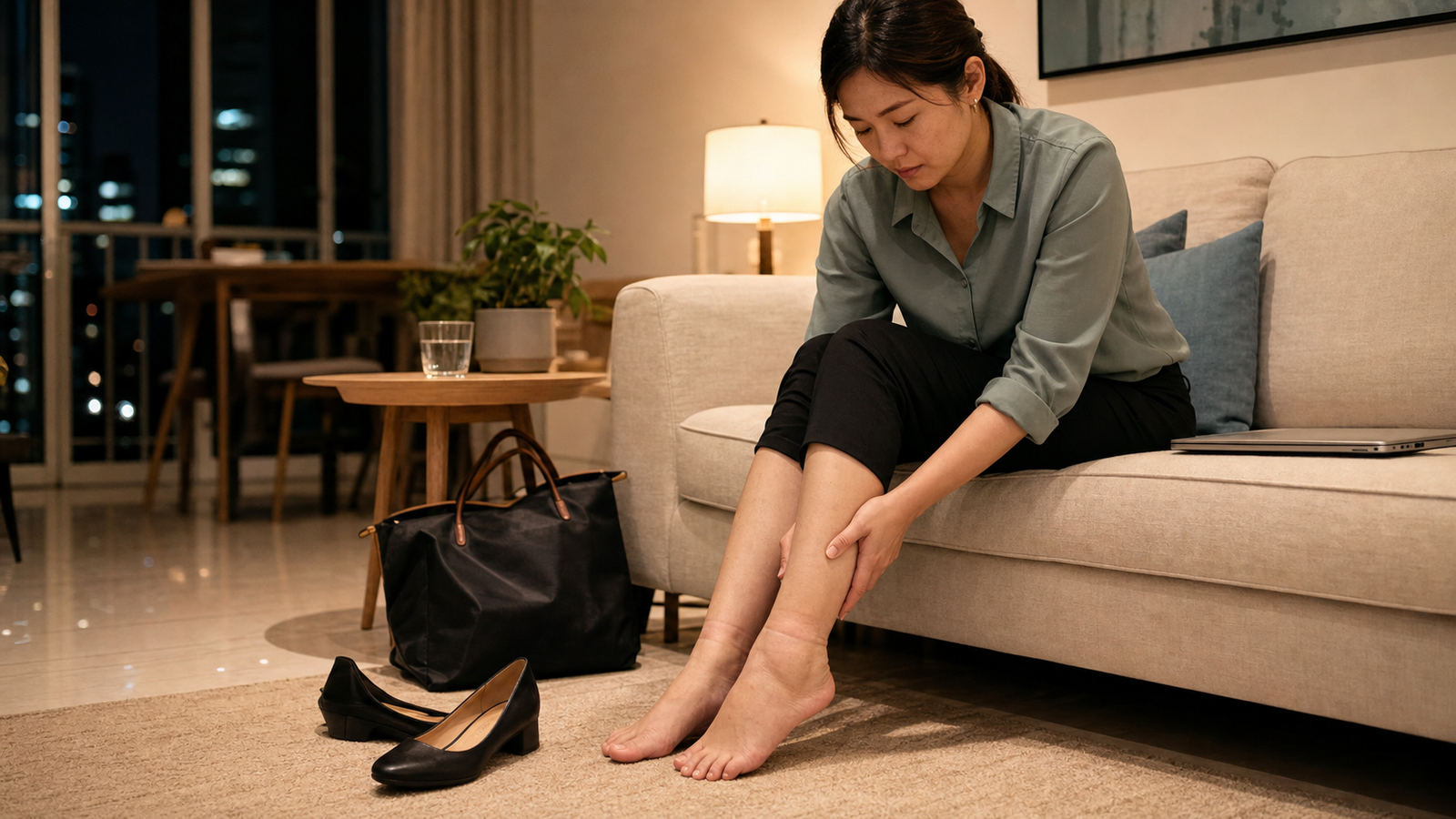
If your legs feel heavy by evening, your socks leave deeper marks, or your ankles look puffier than they did in the morning, it can feel a little unsettling.
The first thought many people have is, "Did I gain weight?" But for many busy adults, especially after a long day of sitting, standing, commuting, or being in warm weather, that heavy or swollen feeling can be related to fluid pooling in the lower legs.
This article is general education, not medical advice. Leg swelling can be mild and temporary, but it can also be a sign of something that needs medical attention. If swelling is sudden, painful, one-sided, getting worse, or comes with breathlessness, chest pain, dizziness, or coughing blood, please seek medical help promptly.
Why Legs Can Feel Heavy by Evening
Leg heaviness and swelling often happen because the lower legs are working against gravity all day.
When you sit for many hours, your calf muscles are not contracting as much. When you stand for long periods, your legs also have to keep moving blood and fluid upward against gravity. If there is little movement, fluid can collect more easily around the feet, ankles, and lower legs.
This does not mean your body is broken. It may simply be a signal that your day has been very static.
Common everyday contributors can include:
- sitting at a desk for long stretches
- standing for many hours at work
- long car, bus, or plane travel
- warm weather
- salty meals or processed foods
- tight socks, jeans, or footwear
- menstrual cycle or hormonal changes
- not moving much during the day
- poor sleep or high stress
The important thing is to notice the pattern. Does it happen only after long workdays? Does it improve after rest, movement, or leg elevation? Is it mild and both-sided, or is it sudden, painful, and one-sided?
Those details matter.
Is It Water Retention, Swelling, or Something Else?
People often use "water retention" casually to describe puffiness, tightness, or heaviness. Medically, swelling caused by fluid buildup in tissues is often called edema.
Mayo Clinic notes that edema is more likely to show up in the legs and feet, and that it can be linked to medication, pregnancy, venous issues, heart conditions, kidney disease, liver disease, and other causes. NHS-linked public health resources also note that swollen ankles, feet, and legs can happen after sitting or standing in the same position for too long, eating too much salty food, pregnancy, or certain medicines.
So the practical answer is this:
**Mild evening puffiness after a long static day can be common, but swelling that is new, severe, painful, one-sided, persistent, or linked with breathing or chest symptoms should be checked.**
That distinction keeps the conversation safe.
Why Sitting All Day Can Make the Legs Feel Swollen
Your calf muscles act a little like a movement pump. When you walk, flex your ankles, climb stairs, or shift positions, the muscles help support circulation and fluid movement.
When the day is mostly sitting, that natural pump is quieter.
This is why a person may feel fine in the morning but notice by evening:
- tighter shoes
- puffy ankles
- heavier calves
- sock lines
- lower-leg tightness
- tired or restless legs
For a busy working woman, this can happen without any dramatic event. It is the slow accumulation of a desk day, meetings, errands, commuting, and not enough movement breaks.
It is also why the solution is not always a dramatic health overhaul. Sometimes the first step is simply to build more flow into the day.
What You Can Try During a Long Workday
These are general comfort habits, not medical treatment. If you have a medical condition, are pregnant, take medication, or have ongoing swelling, check with your healthcare professional first.
1. Add short movement breaks
You do not need a full workout in the middle of the workday. A few minutes can help interrupt long periods of stillness.
Try:
- walking to refill your water
- taking the stairs for one floor
- standing during a phone call
- doing a short walk after lunch
- setting a quiet reminder to move every 60 to 90 minutes
The goal is not to burn calories. The goal is to stop the body from being locked in one position all day.
2. Use simple ankle movements
If you cannot leave your desk, small movements still count.
Try:
- ankle circles
- heel raises
- toe taps
- gently flexing and pointing the feet
- shifting your weight when standing
These movements are simple, but they remind the lower legs to participate again.
3. Elevate your legs when suitable
After work, putting your legs up for a short while may help mild swelling feel more comfortable for some people. Mayo Clinic and Cleveland Clinic both include leg elevation as one general support measure for edema.
You can keep it simple: lie down and rest your legs on a pillow, sofa arm, or wall for a few minutes. It should feel comfortable, not forced.
4. Notice sodium, hydration, and heat
Some people notice puffier legs after a salty meal, processed foods, alcohol, or a very hot day. That does not mean you need to fear salt or drink extreme amounts of water.
It just means you can observe patterns:
- Did I eat a very salty lunch?
- Was today much warmer than usual?
- Did I barely move?
- Did I drink very little water?
- Did I wear tight socks or shoes?
Pattern awareness is often more useful than panic.
When Should Leg Swelling Be Checked?
This part matters.
Leg swelling should not be dismissed if it is unusual for you, persistent, worsening, or linked with other symptoms.
Seek urgent medical help if swelling comes with:
- chest pain
- difficulty breathing
- shortness of breath
- fainting or dizziness
- coughing blood
- sudden unexplained leg pain or swelling
Book a medical review if the swelling is frequent, new, one-sided, painful, severe, or not improving. Certain medicines and health conditions can also contribute to swelling, and only a qualified healthcare professional can assess what is happening for you.
This is not meant to scare you. It is meant to keep the advice grounded.
Can Microcurrent Body Care Help?
For everyday post-workday heaviness, gentle body care can be a helpful part of a calmer routine.
Microcurrent technology is used in some beauty and wellness devices as a gentle form of low-level electrical stimulation. On its own, it should not be treated as a medical solution for swelling. But when paired with guided massage-style movements, it can be part of a relaxing body-care routine that supports body flow, body awareness, and a lighter-feeling reset after long sitting or standing days.
One example is WellSpa, a device-based body-care session that combines guided massage movements with microcurrent technology. The way it is used on the body can follow the direction of natural lymphatic pathways, which makes it relevant for people who often feel heavy, puffy, or tense after a long workday.
But it should be framed properly.
Microcurrent body care and WellSpa are not medical treatments for sudden swelling, painful swelling, one-sided swelling, or swelling linked with breathlessness or chest pain. Those situations need medical attention.
A better way to think about it is:
**Movement breaks support the body during the day. Gentle body care can support how you unwind after the day.**
That is a much calmer and more realistic approach than trying to force your body into a perfect routine.
A Simple Evening Reset for Heavy Legs
If your legs often feel heavy after work, try this simple sequence:
1. Change into comfortable clothing.
2. Drink a glass of water.
3. Walk around slowly for two to five minutes.
4. Do gentle ankle circles or heel raises.
5. Elevate your legs for a short while if comfortable.
6. Notice whether the heaviness improves.
7. Track whether it happens after long sitting, salty meals, heat, or certain shoes.
If the pattern is frequent or worrying, speak with a healthcare professional.
If it feels like normal post-workday heaviness, you can also consider a gentle body-care session as part of your weekly reset.
The Bottom Line
Heavy or swollen-feeling legs after a long workday are not always about fat gain or lack of discipline.
They may be your body’s way of saying:
- you sat too long
- you stood too long
- you need more movement breaks
- today was hot
- your meal was salty
- your legs need recovery and care
Start with simple, low-pressure habits: move a little more often, elevate when suitable, notice your patterns, and stay aware of symptoms that need medical attention.
If your legs often feel heavy after work, you can PM Vern to ask about microcurrent body care and whether a WellSpa session may be a suitable part of your relaxation and body-flow routine.
For a structured place to begin with your overall wellness habits, download Vern Lai’s 7-Day Metabolic Reset Guide at https://vernlai.com/reset.
FAQ
Are heavy legs after work always water retention?
Not always. Heaviness can come from long sitting, long standing, heat, tight clothing, activity, or other causes. If swelling is new, painful, one-sided, persistent, or worrying, get it checked.
Can sitting all day make legs feel swollen?
Yes, long periods of sitting or standing can contribute to fluid pooling in the lower legs for some people. Short movement breaks and ankle movements may help reduce long periods of stillness.
Where does microcurrent body care fit for heavy legs?
Microcurrent body care should not be positioned as a medical solution for swelling. A device-based session such as WellSpa can be framed as gentle body care that supports body flow, relaxation, and a lighter-feeling routine for everyday post-workday heaviness.
- Mayo Clinic: Leg swelling – when to see a doctor. https://www.mayoclinic.org/symptoms/leg-swelling/basics/when-to-see-doctor/sym-20050910
- Mayo Clinic: Edema – symptoms and causes. https://www.mayoclinic.org/diseases-conditions/edema/symptoms-causes/syc-20366493
- Cleveland Clinic: Edema – causes, symptoms and treatment. https://my.clevelandclinic.org/health/diseases/12564-edema
- Cleveland Clinic: Pitting edema – causes, grading and treatment. https://my.clevelandclinic.org/health/symptoms/pitting-edema
- HSE Ireland: Swollen ankles, feet and legs. https://www2.hse.ie/conditions/swollen-ankles-feet-and-legs-oedema/
- British Heart Foundation: What causes swollen ankles and feet? https://www.bhf.org.uk/informationsupport/heart-matters-magazine/medical/ask-the-experts/swollen-ankles