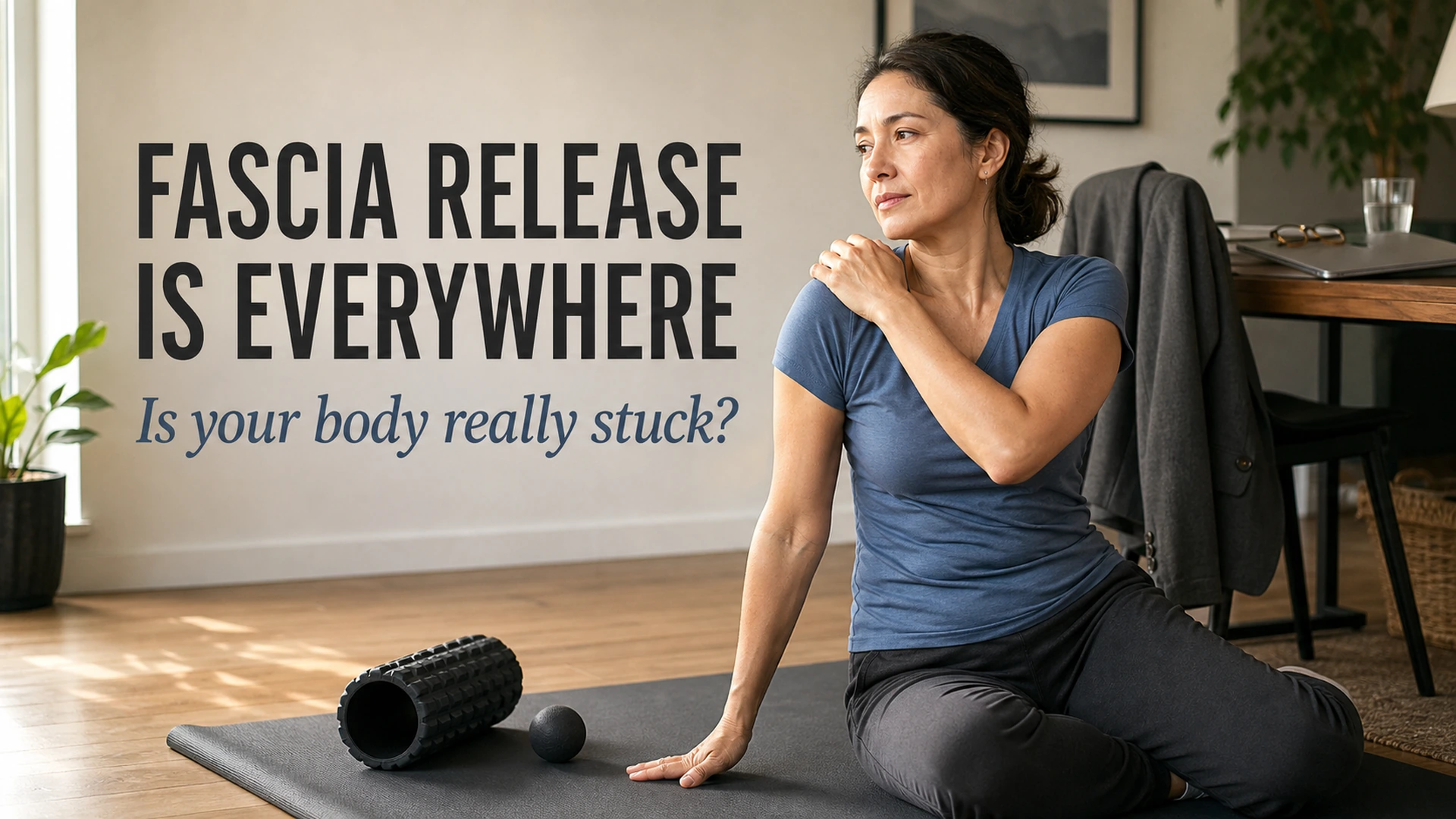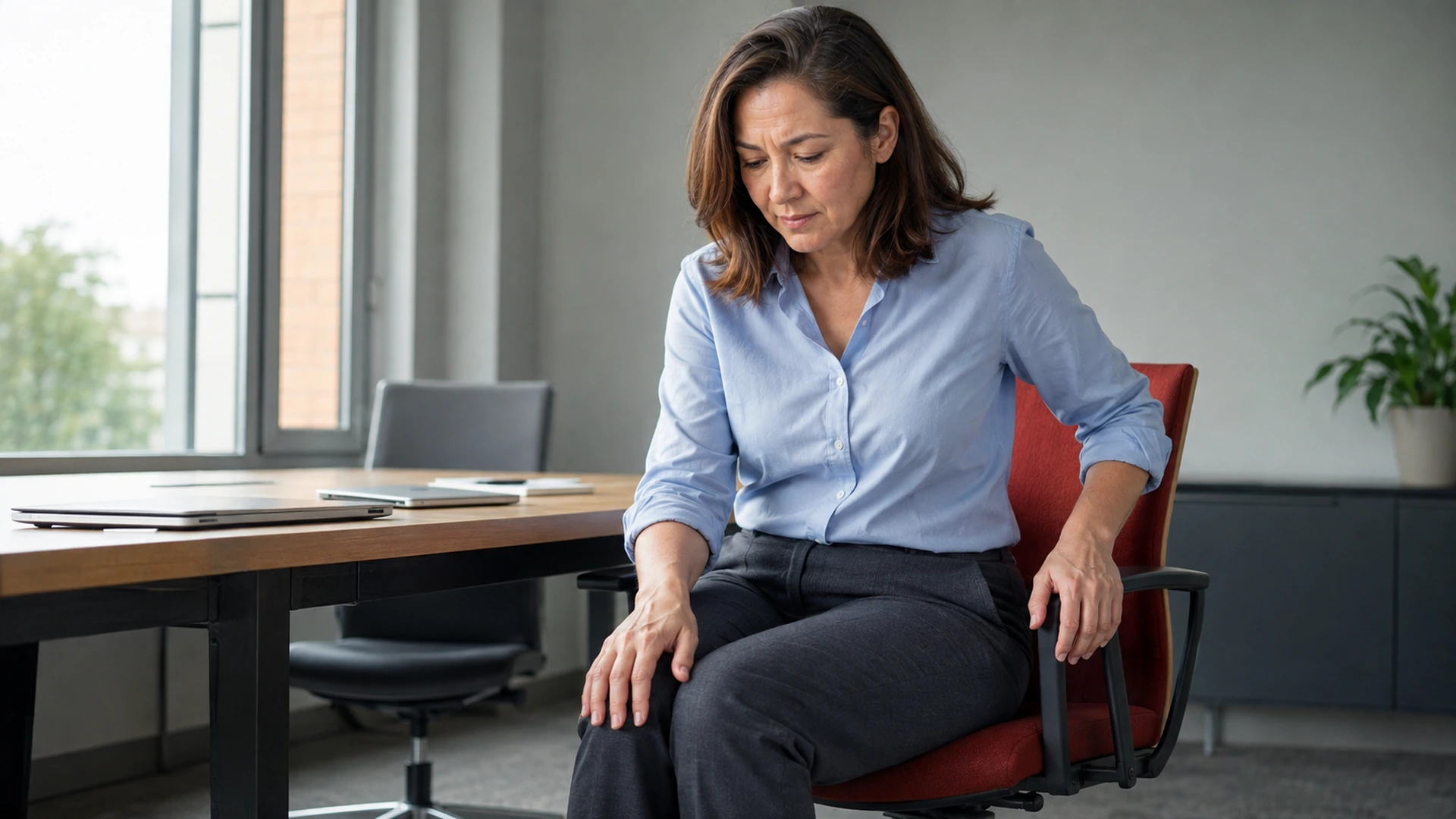
You stand up after a meeting and your knees complain. Opening a jar takes more effort than you expected. There was no new workout, no obvious injury, yet a familiar part of your day suddenly feels awkward.
Aching joints can occur during perimenopause, but the timing alone cannot tell you what is causing them. Hormonal changes may be part of the picture. New or persistent pain still deserves attention, along with a practical look at what you can comfortably do.
The useful question is bigger than "Is this menopause?" It is also: what has changed, what is the discomfort stopping you from doing, and what kind of support would help?
Can perimenopause cause aching joints?
The NHS includes muscle aches and joint pains among recognised perimenopause and menopause symptoms. They can be less obvious to recognise than hot flushes or changing periods, especially when your first thought is that you must have slept awkwardly.
A 2026 systematic review brought together 37 observational studies and found that muscle or joint pain was more common during perimenopause than before it. That supports taking these experiences seriously.
It does not prove that hormones caused a particular person’s knee or hand pain. The studies varied considerably, and specific conditions behind the pain were often not reported. The review was also not a trial showing that a supplement, massage or device resolves these symptoms.
Lower oestrogen levels are one possible contributor discussed in NHS guidance. There is no need to turn that explanation into a diagnosis from a social-media checklist. An injury or arthritis can also cause joint pain, and more than one issue can be present.
What is the ache changing about your day?
"My body feels different" is a reasonable starting point. A few concrete details make that feeling easier to explain when you seek help.
Think about the ordinary tasks involved. Is it standing after a long meeting, taking the stairs, lifting a kettle or getting dressed? Does the discomfort settle quickly, or do you find yourself planning around it?
You could keep a short note on your phone:
- Where you feel the ache and when it began.
- Whether it follows a particular activity or appears at rest.
- How long stiffness lasts, and whether you notice swelling.
- What it interrupts, including sleep, walking or work.
This is a record for a conversation, not a way to diagnose yourself. You do not need a perfect symptom diary, and you do not need to wait until it is complete before making an appointment.
For example, "My hands have been stiff each morning this week, and fastening buttons is difficult" gives a clinician more to work with than a general description of feeling older. It also keeps the discussion anchored to the help you actually need.
Should you rest or keep moving?
Both can have a place. NHS joint-pain guidance advises resting an affected joint when needed without completely stopping its movement. That is different from either pushing through pain or deciding all exercise is off the table.
For general midlife health, NHS menopause guidance recommends regular activity, including resistance and weight-bearing exercise. Those are broad goals, not instructions to start a demanding workout while a joint is painful.
A realistic starting point is to ask what remains comfortable. Perhaps a short walk is manageable, while a long exercise class currently is not. If you are unsure what is appropriate, a physiotherapist or another qualified clinician can help you adapt activity to the problem.
It can be tempting to judge a gentler day against your old routine. But an exercise plan should fit your present ability. There is little value in meeting a target on paper if you cannot comfortably repeat it.
Make room for body care without another demanding routine
An already full workday does not need a lengthy wellness checklist. Choose one practical adjustment you can describe clearly.
For a desk-based day, that might mean leaving space between calls so you have time to change position rather than rushing straight into the next meeting. At home, it might mean asking for help with a task that is currently uncomfortable instead of repeatedly testing whether you can manage it alone.
These are examples of making the day more manageable, not treatments or promises of pain relief. Keep the adjustment small enough that you can tell whether it is useful to you.
Rest and regular meals also deserve space. NHS menopause guidance includes consistent sleep routines and balanced eating as part of general self-care. Neither requires you to interpret every ache as a missing nutrient or start a new product immediately.
Supplements can have a place when they meet an individual nutritional need. The presence of joint pain alone does not establish which one you need. A product decision should have its own reason, rather than being the automatic response to an unexplained symptom.
When should you get joint pain checked?
Arrange an assessment if pain affects normal activities or sleep, keeps returning or worsens. NHS guidance also advises review if symptoms have not improved after two weeks of home care, or morning stiffness lasts more than 30 minutes. These are reasons to seek help, not a requirement to wait.
A hot, swollen joint or joint pain with fever or feeling unwell needs urgent medical advice. Severe pain after an injury, or being unable to walk or bear weight, needs emergency assessment.
You can ask about perimenopause at the same appointment. You do not have to choose between mentioning hormones and getting the joint itself assessed.
Start with a clearer picture
The next step does not have to be a tougher workout or a bigger collection of products. It may be writing down what happens when you stand, walk or use your hands, then deciding whether you need practical support, clinical advice or both.
For a simple way to organise everyday food, movement and rest habits, download my free 7-Day Metabolic Reset Guide. It is a habit-planning resource, not a treatment for joint pain.