
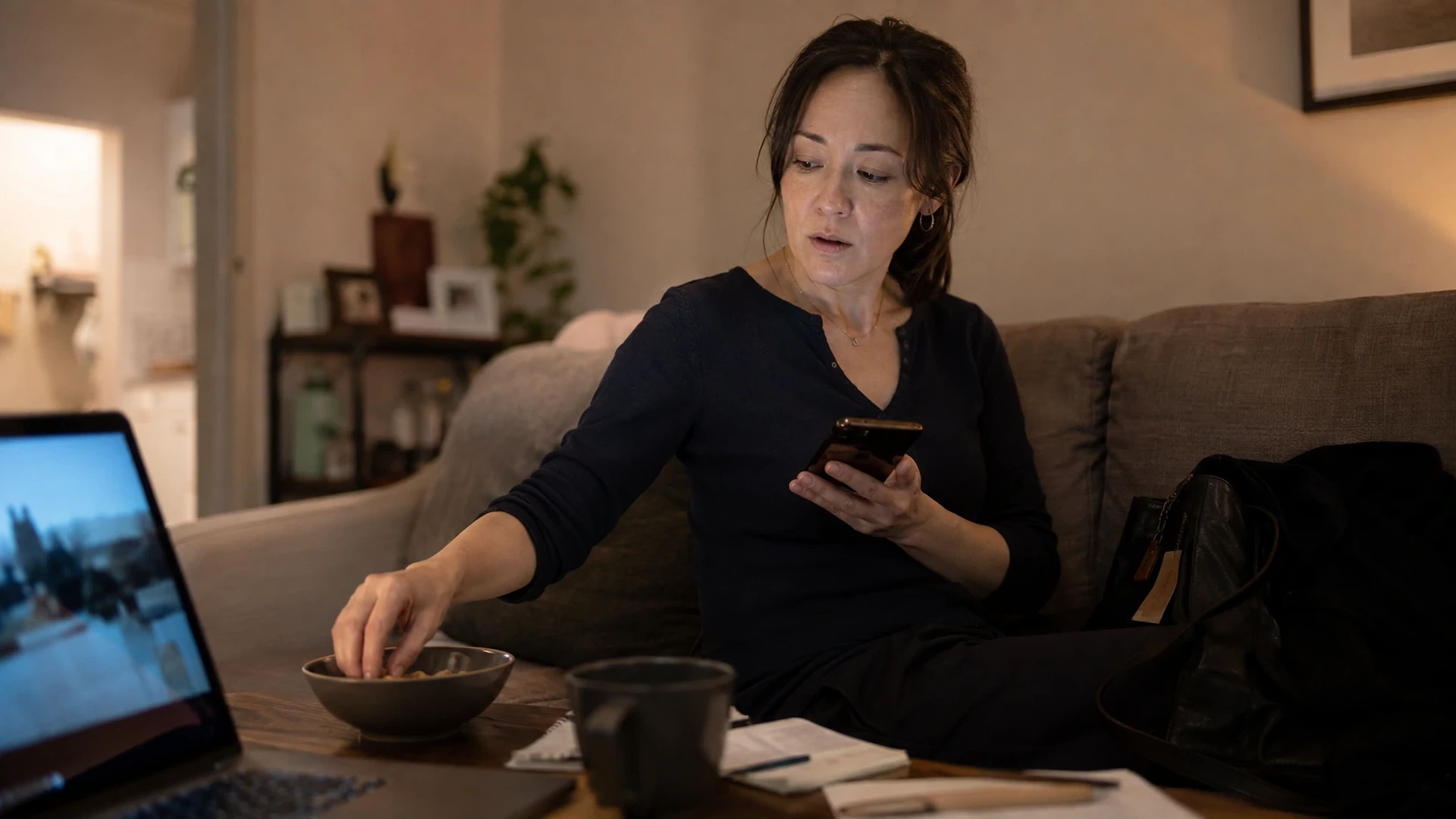
It is 6:47pm. The meeting that was supposed to end at six is still going, lunch feels a long time ago, and dinner has become another decision waiting for you. By the time you close the laptop, the delivery app is already open.
This is a familiar place for healthy intentions to fall apart. You may know what a balanced meal looks like and still struggle to choose one when you are tired, hungry and short on time. A useful response is to make one specific if-then plan before the workday gets busy: “If my meeting runs past 6:30pm, then I will make the quick dinner I have already chosen.”
The plan does not need to be perfect. It needs to remove one decision from the hardest part of your day.
Why good intentions can disappear after work
“I’ll eat better tonight” sounds reasonable in the morning, but it leaves several questions unanswered. What will you eat? What if work runs late? What if the ingredients are not ready? What if you are too hungry to cook the meal you imagined?
An if-then plan connects a situation you can recognise with an action you can take:
> If a predictable situation happens, then I will take this specific action.
Psychologists call these plans *implementation intentions*. A 2026 systematic review and meta-analysis examined their use for increasing fruit and vegetable intake in adults. Across 10 articles and 12 comparisons involving 2,399 participants, people using if-then plans reported eating about 0.29 more portions of fruit and vegetables per day than active control groups. The effect was small, and the studies relied on self-reported intake, so the result should not be treated as proof that one sentence will transform anyone’s diet. The researchers did, however, describe if-then planning as a low-resource, accessible option.
A broader 2024 review of behaviour-change research reached a related conclusion: giving people more information is often less effective than helping them act around real obstacles. Habits, behavioural skills, reminders, social support and access all matter. Knowing what to do is useful, but the plan has to survive the conditions in which the decision is made.
What makes an if-then food plan useful?
A useful plan names a real disruption and a realistic response. “If I get busy, I’ll be healthy” is too vague to guide you at 7pm. “If I leave the office after 7pm, I’ll pick up the prepared meal I chose this morning” gives you a clear cue and action.
Start with the moment that repeatedly catches you out. It may be a late meeting, a delayed commute, a child’s evening activity or the point when you arrive home too tired to cook from scratch. You are looking for a pattern, not a personal failure.
Then choose a response that fits the evening you actually have. It might be:
- If the meeting runs late, then I will heat the frozen meal I keep for busy nights and add a simple vegetable.
- If I arrive home very hungry, then I will start with the planned snack in my bag while dinner is prepared.
- If I have less than 15 minutes, then I will make eggs with wholegrain toast and fruit.
- If I order food, then I will use the restaurant and meal option I selected earlier in the day.
These are examples, not a required menu. Dietary needs, budgets, cultures and household routines differ. The best response is one you can repeat without needing an unusually calm evening.
Make the better option easier to reach
The sentence works better when your environment supports it. If your plan depends on food that is not available, too many steps still sit between the cue and the meal.
Choose one practical support before the day becomes demanding. Put a backup meal in the freezer. Save one suitable takeaway order. Keep a shelf-stable snack in your work bag. Wash or portion one ingredient when you have more energy. Tell someone at home which meal is the backup when both of you finish late.
This preparation is small on purpose. You are arranging one easier response to a predictable problem, not building a flawless meal-prep system.
What if the plan does not work?
Treat the first week as an experiment. If the plan failed, look at where it became difficult.
Was the cue too vague? “If work is stressful” can be hard to spot, while “if the 5pm meeting is still going at 5:45pm” is concrete. Was the response too ambitious? A recipe that takes 45 minutes may not suit a late finish. Was the food unavailable? Your next plan may need a shopping reminder or a second backup.
You can also use a two-level plan:
> If I finish work by 7pm, I will make the quick dinner I planned. If I finish later, I will use my backup meal or saved order.
The aim is to learn what helps in your real week. Missing the plan once is information you can use to make the next version more practical.
Try one plan for the next seven days
Pick one evening disruption that is likely to happen this week and complete this sentence:
> If __________________ happens, then I will __________________.
Keep the action specific enough that you could follow it while tired. Prepare whatever makes that action easier, then notice what happens. Did the cue occur? Did you remember the plan? Was the response realistic? What would you change before next week?
Healthy eating after a long workday often depends on a choice made much earlier. Make that one choice while you still have time and energy, then let the plan carry part of the load at 6pm.
For a simple way to review your meals and routines over one week, download Vern Lai’s free 7-Day Metabolic Reset Guide.
Frequently asked questions
Do if-then plans guarantee healthier eating?
No. The recent meta-analysis found a small improvement in self-reported fruit and vegetable intake, with important limitations. An if-then plan is a practical planning tool, not a guarantee.
Should I create a plan for every meal?
Begin with one repeated pressure point. A single plan for late meetings or tiring commutes is easier to test and adjust than a long set of rules.
- Melum SK, Martiny-Huenger T. “A systematic review and meta-analysis on the effectiveness of if-then plans—in a strict sense—to facilitate fruit and vegetable consumption in adults.” International Journal of Behavioral Nutrition and Physical Activity, 2026. PubMed.
- Albarracín D, Fayaz-Farkhad B, Granados Samayoa JA. “Determinants of behaviour and their efficacy as targets of behavioural change interventions.” Nature Reviews Psychology, 2024. Nature Reviews Psychology.



2 thoughts on “If Work Runs Late, What Will You Eat? Make the Plan Earlier”