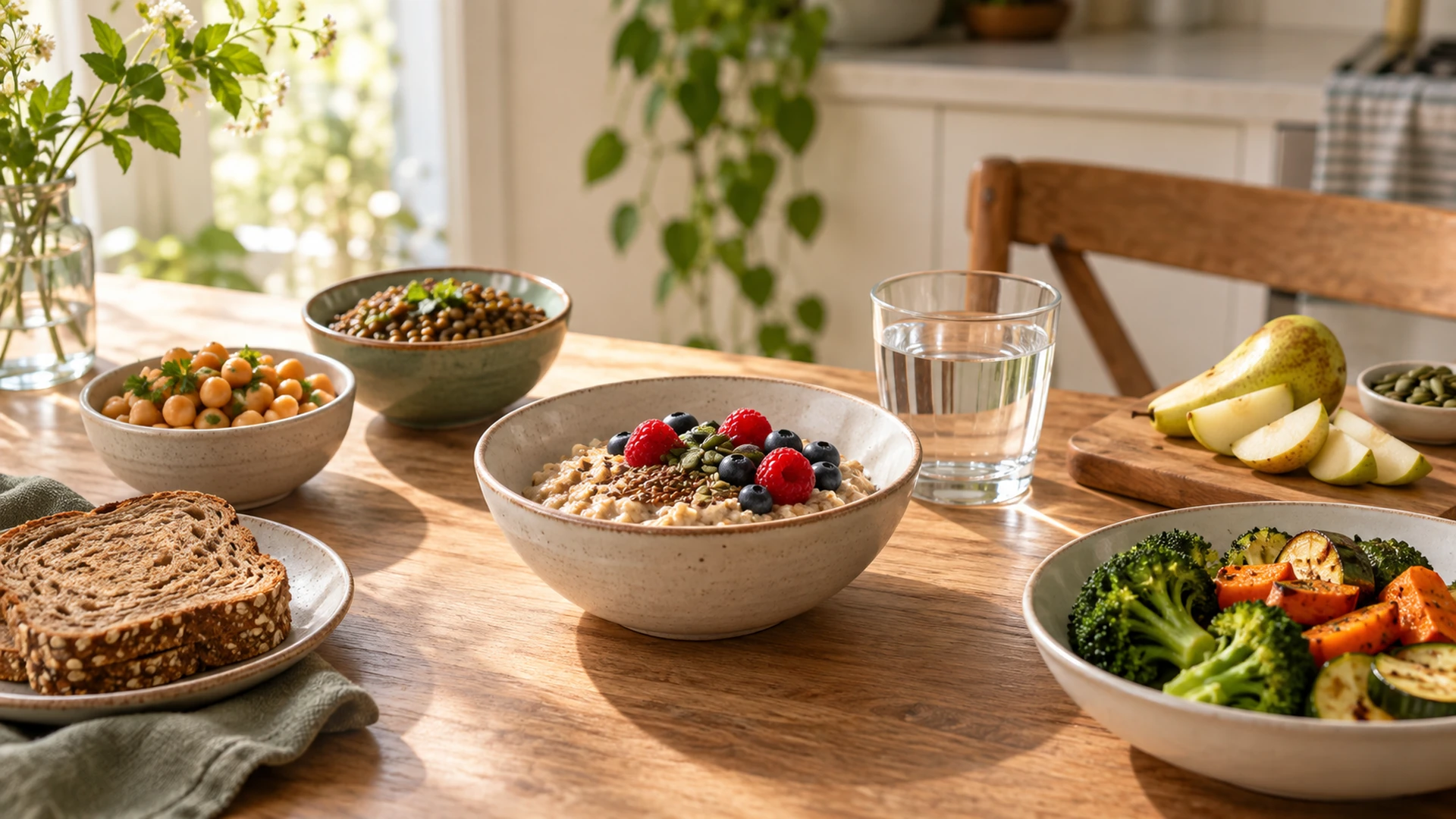
When appetite becomes smaller, it is easy to think the job is done.
You eat less. You feel full faster. The portions look smaller. The scale may even start moving.
But the common mistake is this:
**Eating less is not the same as eating better.**
For people using GLP-1 medication, thinking about it, or simply following the trend, nutrition quality still matters. Smaller meals still need enough structure to support protein, fibre, hydration, energy, and everyday strength. Otherwise, a lower appetite can quietly turn into skipped meals, low-protein days, constipation, tiredness, or random snack cravings later.
This is general education, not medical advice. GLP-1 medications should be discussed with a qualified healthcare professional, especially if you have side effects, a medical condition, or questions about your dosage, nutrition, or suitability.
Why GLP-1 Changed the Conversation
GLP-1 medications have become a major weight-management conversation because they can affect appetite and fullness. Some GLP-1 receptor agonists are prescribed for type 2 diabetes, and some are approved for chronic weight management under medical supervision.
This matters because many people have spent years being told that weight management is only about willpower.
Just eat less.
Just stop snacking.
Just control yourself.
The GLP-1 conversation shows that appetite biology is real. Fullness, hunger, food noise, stress, sleep, medication, and environment can all shape how easy or difficult eating habits feel.
But there is another side to the conversation.
When appetite drops, the goal is not only to make food smaller. The goal is to make the food that remains count.
What Is the Common Mistake?
The common mistake is treating "less food" as the full plan.
If a person feels full quickly, they may naturally eat smaller portions. That can be part of the medication effect for some people. But if the smaller intake is mostly coffee, crackers, a few bites of noodles, or whatever is easy between meetings, the day may not provide enough nourishment.
For busy working women, this can happen very quietly.
Breakfast becomes coffee.
Lunch becomes half a meal.
Dinner becomes whatever is left after work.
Then the person wonders why energy feels flat, cravings still appear, or strength training feels harder.
The issue may not be a lack of discipline. It may be a lack of meal structure.
Why Protein Still Matters
During any weight-management phase, preserving lean mass deserves attention. Lean mass includes muscle, and muscle supports strength, movement, function, and healthy ageing.
Research discussions around GLP-1-based weight loss have raised the importance of lean mass preservation, especially because weight loss can include both fat mass and lean mass. This does not mean everyone needs a complicated bodybuilding routine. It means protein and strength-supporting habits should not disappear just because appetite is lower.
A practical starting question is:
**Is there a protein source at most meals?**
This could be eggs, tofu, Greek yogurt, fish, chicken, tempeh, lean meat, beans, lentils, or another option that fits your culture, budget, appetite, and medical needs.
If your appetite is very low, this is where professional guidance matters. A dietitian or healthcare professional can help you adjust safely without forcing an unrealistic plan.
Why Fibre Still Matters
Fibre is another anchor that can get missed when people eat less.
Fibre-rich foods such as vegetables, fruit, beans, lentils, oats, whole grains, nuts, and seeds can support meal quality and fullness. Some people using GLP-1 medications also talk about digestive changes, so it is worth paying attention to fibre and fluid intake in a careful, individual way.
This does not mean suddenly adding a huge amount of fibre overnight. That can be uncomfortable for some people.
A calmer approach is to ask:
- Is there a vegetable, fruit, bean, or whole-grain choice somewhere in the meal?
- Am I drinking enough fluid for the day?
- Am I increasing fibre gradually instead of forcing a big change?
- Am I paying attention to digestion, not ignoring it?
Again, if you have symptoms, medication side effects, or a medical condition, check with your healthcare professional.
Smaller Appetite Needs a Smarter Plate
When portions shrink, each part of the plate has to work a little harder.
One simple way to think about it:
- **Protein** helps make the meal more substantial.
- **Fibre-rich carbohydrates and plants** add texture, volume, and nutrients.
- **Healthy fats** can make meals satisfying in small amounts.
- **Fluids** support basic daily function and digestion.
- **Strength movement** helps remind the body that muscle matters.
This is not a perfect-plate rule. It is a gentle checklist.
For example, instead of having only kopi and toast, you might add eggs or Greek yogurt later in the morning.
Instead of a very small lunch that leaves you tired by 3pm, you might choose fish soup with tofu and vegetables, chicken rice with extra vegetables and a smaller rice portion if that suits you, or yong tau foo with a protein-forward selection.
Instead of skipping dinner because you are not very hungry, you might have a smaller protein-and-vegetable meal that is easier to finish.
The point is not to eat perfectly.
The point is to avoid letting "less food" become "less nutrition."
What Busy Adults Can Check This Week
If GLP-1 is part of your life, your healthcare team should guide your medication and nutrition needs. But from a habit-support perspective, these questions are useful for many busy adults:
1. **Did I get protein at my first real meal?**
This can help create structure earlier in the day.
2. **Did I include one fibre-rich food today?**
Start simple: fruit, vegetables, oats, beans, lentils, or whole grains.
3. **Did I drink enough water for my normal routine?**
Do not wait until the end of the day to catch up.
4. **Did I do any strength-supporting movement this week?**
This can be gym work, resistance bands, bodyweight movement, or guided strength training.
5. **Did I check more than the scale?**
Energy, strength, digestion, meal consistency, sleep, waist fit, and body composition can all give context.
These checks are not meant to create pressure. They are meant to help you notice patterns earlier.
If You Are Not on GLP-1, This Still Applies
This article is not only for people using medication.
Many people try to lose weight or improve health by simply eating less. They skip breakfast, cut lunch smaller, avoid carbohydrates, or push through hunger with coffee.
Sometimes that works for a short while.
But if the plan leaves you tired, snacky, undernourished, or disconnected from your body, it may not be sustainable.
The better question is not:
"How little can I eat?"
The better question is:
**"How can I eat in a way that supports my real day?"**
For many busy women, especially after 40, that means paying attention to protein, fibre, strength, sleep, stress, and meal rhythm instead of chasing the smallest possible portion.
The Bottom Line
GLP-1 may help some people eat less under medical supervision, but eating less is not the same as eating better.
The common mistake is forgetting that smaller meals still need enough nourishment.
Before you focus only on the amount of food, check the structure of the food:
- protein
- fibre
- fluids
- strength-supporting movement
- body composition awareness
- a routine you can actually repeat
If you want a simple place to begin, download Vern Lai’s free 7-Day Metabolic Reset Guide at https://vernlai.com/reset.
And if you are using GLP-1 medication or managing a health condition, speak with your healthcare professional before changing your food, movement, or medication plan.
FAQ
Can GLP-1 make someone eat too little?
GLP-1 medications can reduce appetite for some people. If appetite becomes very low, or eating becomes difficult because of side effects, it is important to speak with a healthcare professional for individual guidance.
Should GLP-1 users focus on protein?
Protein is commonly discussed as part of supporting lean mass during weight management. Individual needs vary, so people using GLP-1 medication should ask their healthcare professional or dietitian what is appropriate.
Is eating less always better for weight management?
Not always. Eating less may reduce energy intake, but food quality, protein, fibre, strength habits, sleep, and consistency also matter for a sustainable routine.
- MedlinePlus: Semaglutide Injection. https://medlineplus.gov/druginfo/meds/a618008.html
- U.S. Food and Drug Administration: Wegovy Prescribing Information. https://www.accessdata.fda.gov/drugsatfda_docs/label/2024/215256s013lbl.pdf
- PubMed: Lean Body Mass Changes With Glucagon-Like Peptide-1-Based Weight Loss. https://pubmed.ncbi.nlm.nih.gov/40158069/
- The American Journal of Clinical Nutrition: Nutritional priorities to support GLP-1 therapy for obesity. https://pmc.ncbi.nlm.nih.gov/articles/PMC12125019/
- Food Business News: GLP-1 ranks as No. 1 health trend for 2026. https://www.foodbusinessnews.net/articles/29573-glp-1-ranks-as-no-1-health-trend-for-2026