A short walk after a meal is often suggested as a simple way to support blood sugar. It may help reduce the post-meal glucose rise for some people, but the evidence does not show that it works the same way for everyone or that one exact walking routine is right for all.
The studies are small and use different groups and walking plans. So a post-meal walk can be a practical habit to try if it suits your day. It is not a treatment, a guarantee, or a reason to fear normal changes in glucose.
Why does blood sugar rise after a meal?
When you eat foods containing carbohydrate, digestion breaks some of that carbohydrate into glucose. Glucose enters the bloodstream and the body uses it for energy. A rise after eating is a normal part of this process.
The amount and timing of the rise can vary with the meal, portion, recent activity, sleep, medication and a person’s health. One reading on its own cannot diagnose insulin resistance or tell you whether a meal was “good” or “bad.” For a closer look at the role of the whole meal, read why glucose can rise after a meal.
What have walking studies found?
In a small controlled study, 10 inactive adults aged 60 or older who were at risk of glucose intolerance completed different walking plans. Three 15-minute walks after meals improved 24-hour glucose control compared with a control day, and the after-meal routine reduced the post-dinner glucose response more than a single 45-minute walk earlier in the day. The researchers described this as a short-term result in a specific group, not a universal prescription. Read the study in Diabetes Care.
Another small crossover study tested 14 healthy women over 50 after a carbohydrate-rich meal. Slow walking for 15 or 40 minutes lowered glucose during the walking period, with the longer walk reducing the two-hour glucose response. It was a short experiment, so it cannot tell us what will happen for every person or over the long term. Read the study in Applied Physiology, Nutrition, and Metabolism.
Taken together, these studies suggest that moving after eating can influence the glucose response in some settings. They do not prove that a short walk prevents diabetes, causes weight loss, or replaces medical care. The participants, meals and walking protocols were specific, and larger, longer studies are needed to answer broader questions.
Do you need to walk after every meal?
No. You do not need to turn every meal into a glucose-management task. The routine that fits your life is more useful than an ambitious plan you cannot keep.
If walking is comfortable for you, try it after one meal when your schedule allows. Some trials tested 15-minute walks. That is a study duration, not a required minimum. If 15 minutes does not fit, a shorter, easy walk can still be a manageable way to add movement, but the research cannot promise it will produce the same glucose effect.
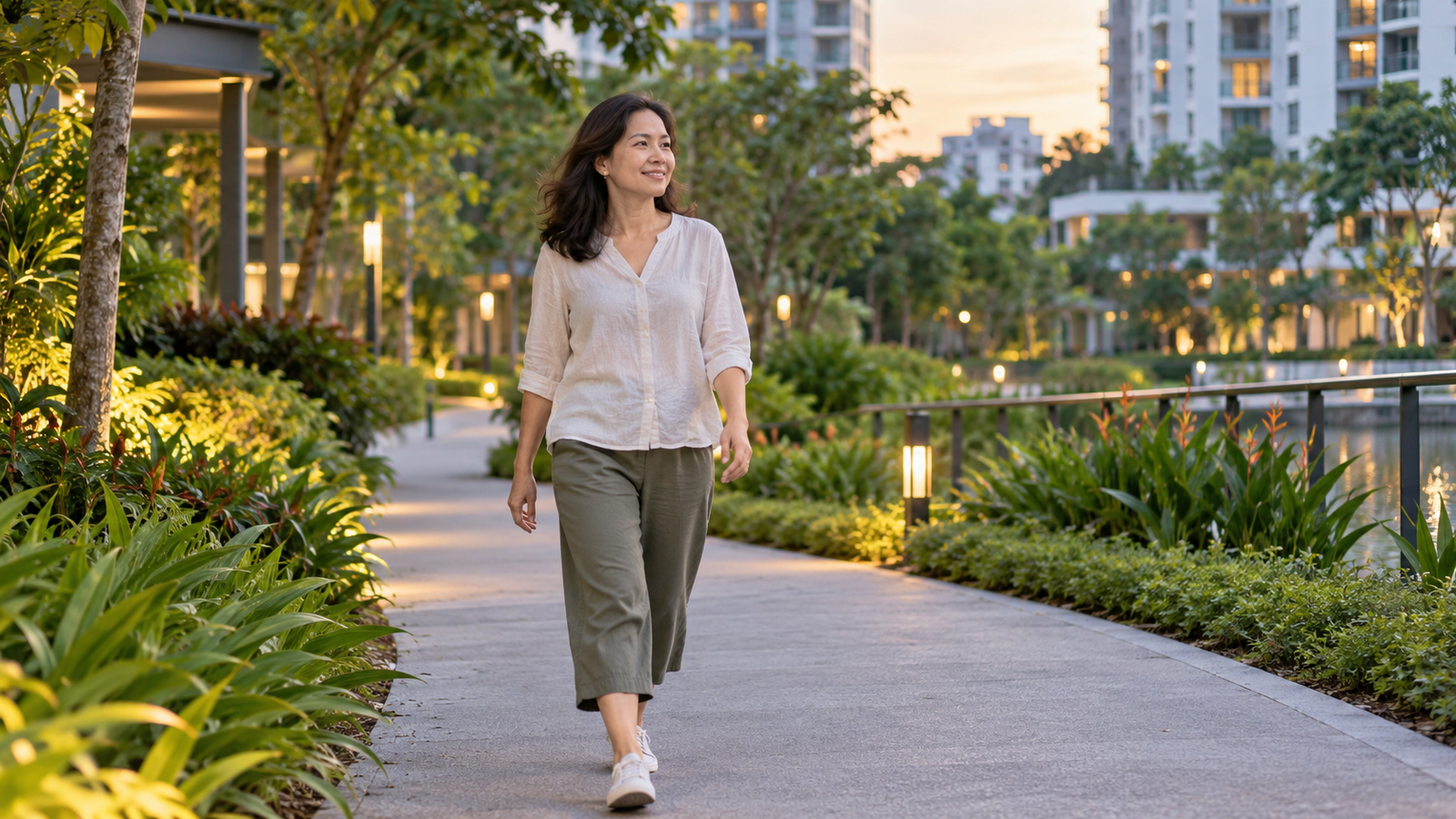
- Walk at a comfortable pace around your block, workplace or shopping centre.
- Choose a route that feels safe and manageable, especially in hot or wet weather.
- Notice whether the routine fits your day. You do not need to check a glucose number to decide whether the habit is worthwhile.
Walking is one part of an active week. If you already walk regularly and are wondering what else may support strength as you age, see how walking and strength training serve different roles.
A note if you have diabetes or take glucose-lowering medication
Physical activity can lower blood glucose during exercise and for hours afterward. If you use insulin or another medicine that can cause low blood glucose, ask your healthcare team how to add activity safely and whether you need to monitor your levels. Do not change medication or meal instructions based on a blog post. The National Institute of Diabetes and Digestive and Kidney Diseases explains how activity and diabetes medicines can affect low blood glucose.
How to try it without making it another rule
- Pick one meal that usually leaves a little room in your schedule.
- Take a comfortable walk if it feels safe for you. Start with a duration you can repeat. Research-tested durations are not personal prescriptions.
- Keep your usual care plan. Do not skip meals or change medication to try to flatten a glucose reading.
- After a week, ask whether the walk felt practical. Keep it, adjust it or let it go based on your circumstances.
If walking brings pain, dizziness or unusual symptoms, stop and seek advice from a healthcare professional. If you have mobility, balance or foot concerns, ask what type of movement is suitable for you.
The takeaway
A gentle walk after eating may reduce the glucose rise for some people, but the evidence comes from small studies in specific groups. There is no single duration that guarantees a result for everyone. Treat it as an optional, practical movement habit, not a cure, a weight-loss shortcut or a replacement for individual medical advice.
For a simple structure to build balanced meals and daily habits, download Vern Lai’s free 7-Day Metabolic Reset Guide.
This article is for general wellness education and is not a substitute for individual medical advice.
Sources:
- DiPietro L, et al. “Three 15-min bouts of moderate postmeal walking significantly improves 24-h glycemic control in older people at risk for impaired glucose tolerance.” Diabetes Care, 2013.
- Nygaard H, et al. “Slow postmeal walking reduces postprandial glycemia in middle-aged women.” Applied Physiology, Nutrition, and Metabolism, 2009.
- National Institute of Diabetes and Digestive and Kidney Diseases. “Low blood glucose (hypoglycemia).”