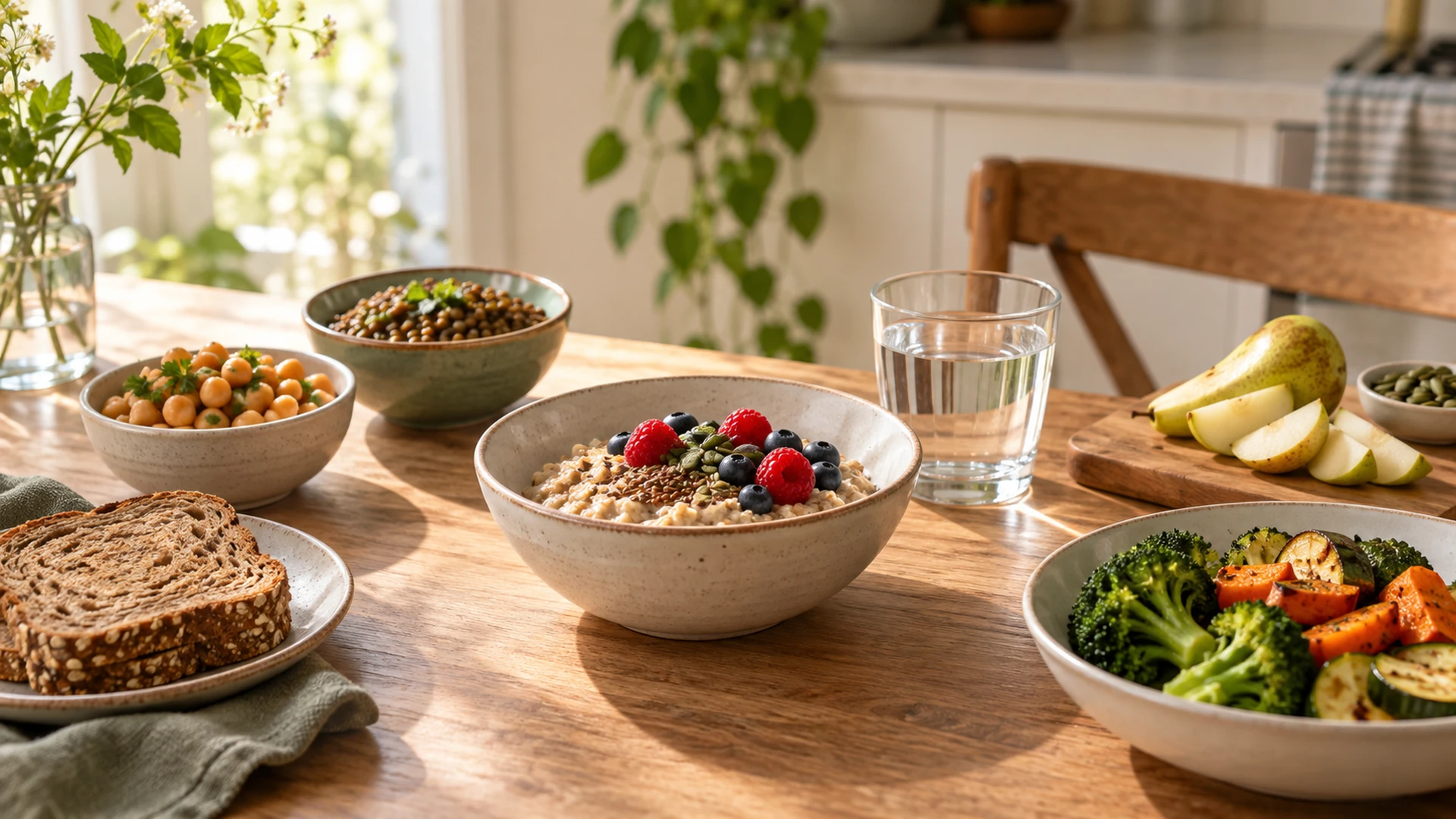
It is 7:15pm. You are tired, the kitchen is quiet for the first time all day, and cooking a full meal feels like one more job. It is tempting to think that eating well requires a fresh recipe, a long shopping list and plenty of time.
Most busy days do not look like that. A useful meal can be simple, assembled from convenient foods, and adjusted to what you have. The aim is not to make every dinner perfect. It is to make a nourishing choice easier on the days when your energy is low.
Use a simple meal-building formula
Start with one food that provides protein, add a fruit or vegetable if you have one, and choose a grain, starchy food or other source of energy that suits your appetite. This is a flexible prompt, not a rule or portion test. Your needs, culture, budget, access to food and health conditions all matter.
For example, eggs with toast and tomatoes, beans with microwave rice and frozen vegetables, or tofu added to leftover noodles can make a quick meal. You can also combine leftovers rather than cooking each ingredient from scratch. A meal does not have to be elaborate to count.
Keep a few convenient building blocks
- Protein foods: eggs, plain yoghurt, canned beans or lentils, tofu, tinned fish, cooked chicken, or a suitable alternative.
- Fruit and vegetables: fresh produce, frozen vegetables, pre-washed salad, canned tomatoes, or fruit that is ready to eat.
- Easy energy sources: bread, oats, rice, potatoes, pasta, wraps or another familiar staple.
- Flavour: herbs, spices, a sauce you enjoy, lemon or another ingredient that makes the meal appealing.
Frozen, canned and ready-to-use foods can be useful. Check labels when it helps you compare options, but you do not need to reject a convenient food because it is not fresh or homemade. Choose what fits your preferences and circumstances.
Try a two-minute check before ordering
Before opening a delivery app, ask: “What do I already have? What would make this feel like a meal? What can I assemble in ten minutes?” You might add a side of vegetables to leftovers, put beans into soup, or pair fruit with yoghurt and toast. If ordering food is the most realistic choice tonight, you can still select something that feels satisfying to you.
Planning can help, but it should reduce work rather than create another standard to meet. Some people keep one or two backup meals in the freezer. Others buy ingredients for a few flexible combinations. A small plan that you use is more helpful than a detailed plan that makes you feel behind.
If family members have different preferences, you may not need to cook separate dinners. See how one shared meal can allow for different choices. If your workday often runs late, planning for dinner before the evening rush may also help.
Make the next busy day a little easier
Choose one backup meal you can prepare with foods you usually have. Write down only what you need to remember, such as “eggs + frozen vegetables + toast.” Keep the ingredients where you can find them, and update the plan when your week changes.
Official food guidance from several countries encourages flexible planning, using a mix of food groups and preparing extra portions when practical. Those ideas can be adapted to local foods and budgets; no single plate formula works for every person or every meal.
If you have a medical condition, food allergy, swallowing difficulty or specific nutrition needs, follow advice from your healthcare team. Otherwise, start with a meal that is realistic, enjoyable and easy enough to repeat. If you would like a broader routine check, download the free 7-Day Metabolic Reset Guide.
Sources
- Food Standards Scotland: Meal planning.
- Australian Government Department of Health: Healthy eating at home and out.
- Health Canada: Cook more often.