You decide to eat better, so you change everything at once. Bran cereal replaces your usual breakfast. Lunch now includes a large serving of beans and raw vegetables. A fibre-enriched snack appears in your bag.
By evening, your stomach feels tight and uncomfortable. You may wonder whether fibre simply does not agree with you.
A sudden increase in fibre can cause wind, bloating and stomach upset. That reaction does not automatically mean you need to give up. For many people, the more useful adjustment is to increase fibre gradually, make one change at a time and drink enough fluids while the body gets used to the change.
Why eating more fibre can feel uncomfortable at first
Fibre is found in plant foods such as whole grains, pulses, fruit, vegetables, nuts and seeds. The World Health Organization recommends that people older than 10 aim for at least 25 grams of naturally occurring dietary fibre each day. Other national guidelines use slightly different figures, so this is a general reference rather than a personal prescription.
The goal sounds simple. The route matters.
Worcestershire Acute Hospitals NHS Trust advises people to increase fibre gradually because a sudden jump can cause wind, bloating and stomach upset. The US National Institute of Diabetes and Digestive and Kidney Diseases gives similar advice: add fibre a little at a time so your body can become accustomed to the change.
This is easy to overlook when a new health goal creates urgency. If yesterday’s meals contained little fibre, adding several high-fibre foods and a supplement today can be a large change. The discomfort may come from the pace of the increase, not from a single food being “bad” for you.
The mistake is often the size of the change
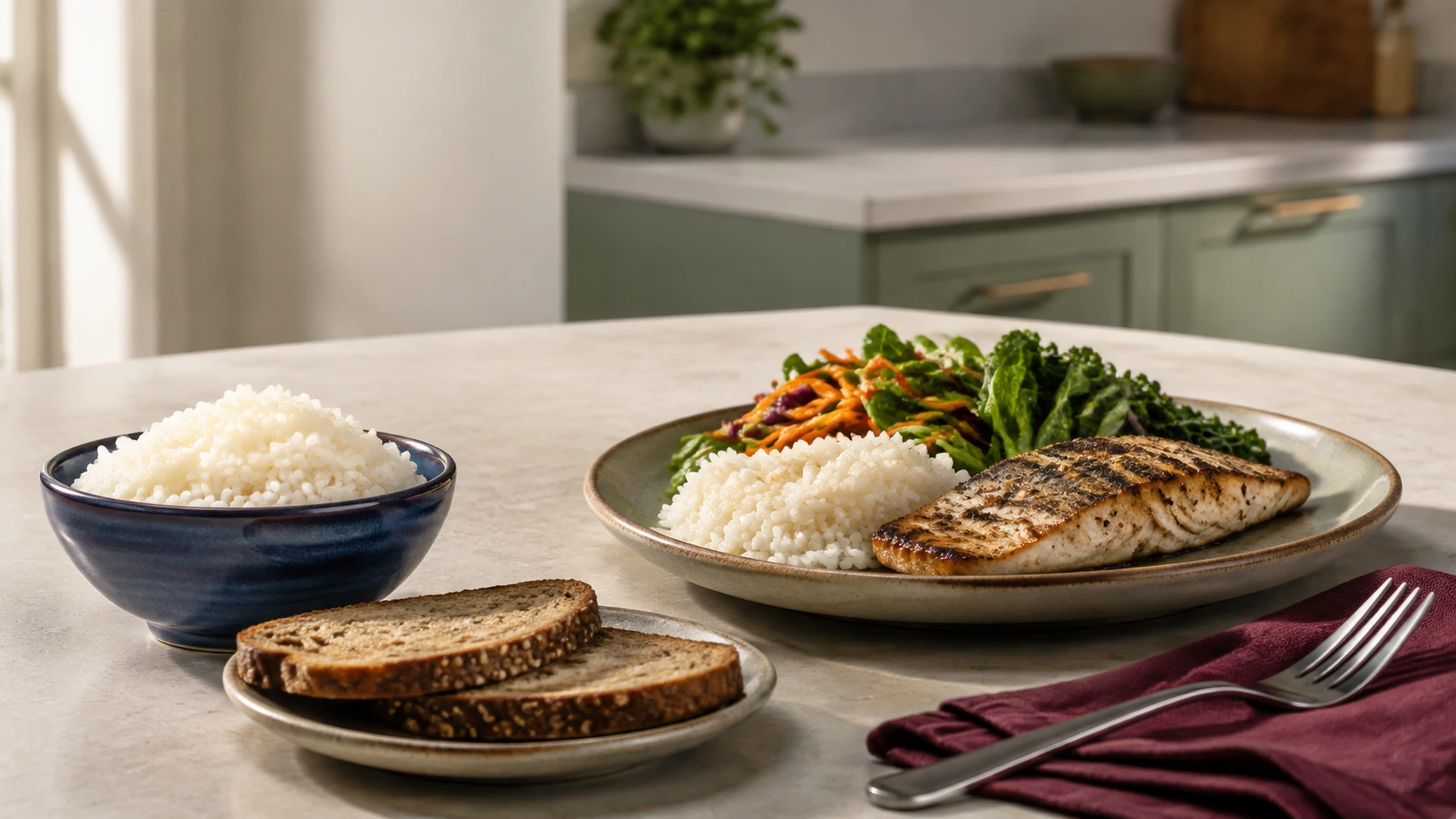
Imagine a busy Monday. You eat bran cereal with fruit for breakfast, order a lentil bowl with a large raw salad for lunch, snack on a fibre bar, then add extra beans and brown rice at dinner. Every choice sounds sensible on its own. Together, they may be much more fibre than your usual day.
When discomfort follows, it is difficult to know which change mattered. You may remove beans, stop eating whole grains or decide that healthy eating is too complicated.
A slower approach gives you better information. It allows you to notice how a particular change fits your appetite, digestion, schedule and food preferences. It also makes the habit easier to keep because you are improving meals you already eat instead of rebuilding your entire diet overnight.
How to increase fibre more gradually
You do not need to count every gram or follow an elaborate meal plan. Start by looking at an ordinary day and choosing one realistic place to add a fibre-rich food.
1. Make one change at a time
Choose a single adjustment that fits a meal you already eat. You might add fruit to breakfast, choose wholegrain bread for lunch, include a small serving of lentils with dinner, or add vegetables to a familiar dish.
Keep the rest of the day fairly normal while you see how that change feels. If it suits you, it can become part of your routine before you add another.
2. Spread fibre-rich foods across the day
Trying to “catch up” with one very large serving can feel harder than including moderate amounts at several meals. A piece of fruit at breakfast, vegetables or pulses at lunch, and a wholegrain or vegetable at dinner can be more manageable than concentrating everything into one oversized salad.
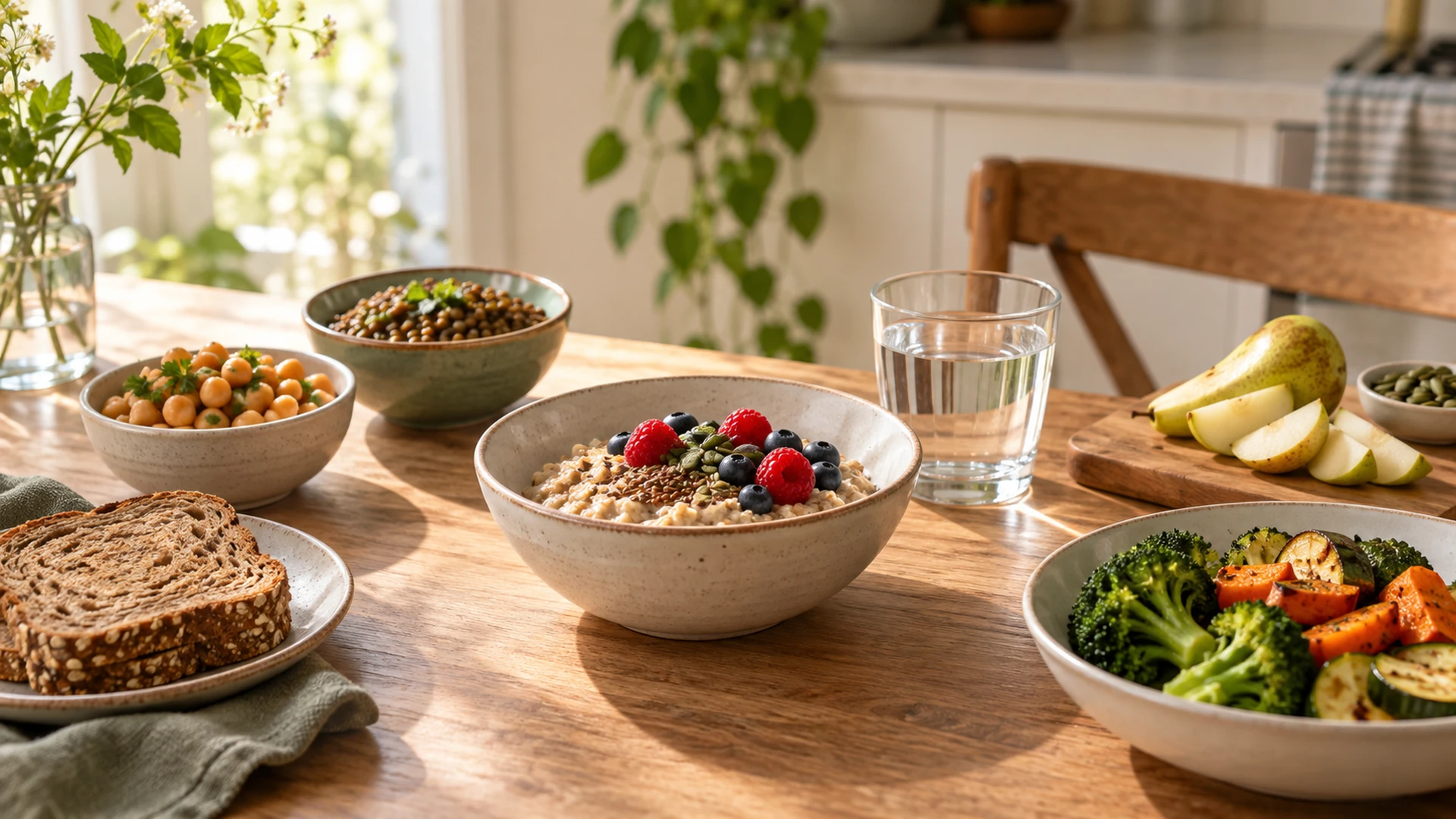
This also gives you more ways to choose foods you enjoy. Fibre does not have to mean bran cereal or raw vegetables. Oats, wholegrain bread, brown rice, potatoes with their skin, beans, lentils, chickpeas, fruit, cooked vegetables, nuts and seeds can all contribute.
3. Remember fluids
NIDDK advises drinking enough water and other liquids to help fibre work better. Fluid needs vary with body size, health, activity and climate, so a universal number will not suit everyone.
A practical check is whether you are adding dry, fibre-rich foods while barely drinking during a meeting-filled day. Keep a drink accessible and have fluids regularly instead of trying to make up for the whole day at night.
4. Use familiar foods before chasing specialised products
Fibre powders and fortified snacks can be convenient, but they are not required for everyone. WHO guidance places naturally occurring fibre from foods such as whole grains, vegetables, fruit and pulses at the centre of a healthy diet.
Start with the meals you already buy, cook and enjoy. Add beans to a soup, include fruit with yoghurt, mix some brown rice into your usual rice, choose wholegrain toast, or add cooked vegetables to dinner. Convenience matters, especially during a busy week, but the easiest habit is often a small change to a familiar meal.
5. Pay attention without turning digestion into a daily test
Notice broad patterns: what you changed, whether the portion was much larger than usual, and whether discomfort settles as your routine becomes more consistent. There is no need to monitor every sensation or blame one food after a single meal.
If symptoms are severe, persistent or getting worse, general nutrition advice is no longer enough. A doctor or qualified dietitian can help assess what is happening and whether your fibre intake needs to be adjusted for a health condition.
What should you do tomorrow?
Keep the fibre goal, but make the next step smaller.
Choose one meal and add one fibre-rich food that feels familiar. Drink fluids regularly during the day. Leave the rest of your routine alone long enough to notice how the change fits.
Eating more fibre should not become another all-or-nothing wellness challenge. A gradual approach may feel less impressive than a complete diet overhaul, but it is easier to understand, adjust and repeat.
If you want a simple structure for reviewing your meals and daily habits, download Vern Lai’s free 7-Day Metabolic Reset Guide.
- World Health Organization. Healthy diet. Updated 26 January 2026.
- National Institute of Diabetes and Digestive and Kidney Diseases. Eating, Diet, & Nutrition for Constipation.
- Worcestershire Acute Hospitals NHS Trust. High Fibre Diet.
- Veronese N, et al. The impact of dietary fiber consumption on human health: An umbrella review of evidence from 17,155,277 individuals. Clinical Nutrition, 2025.