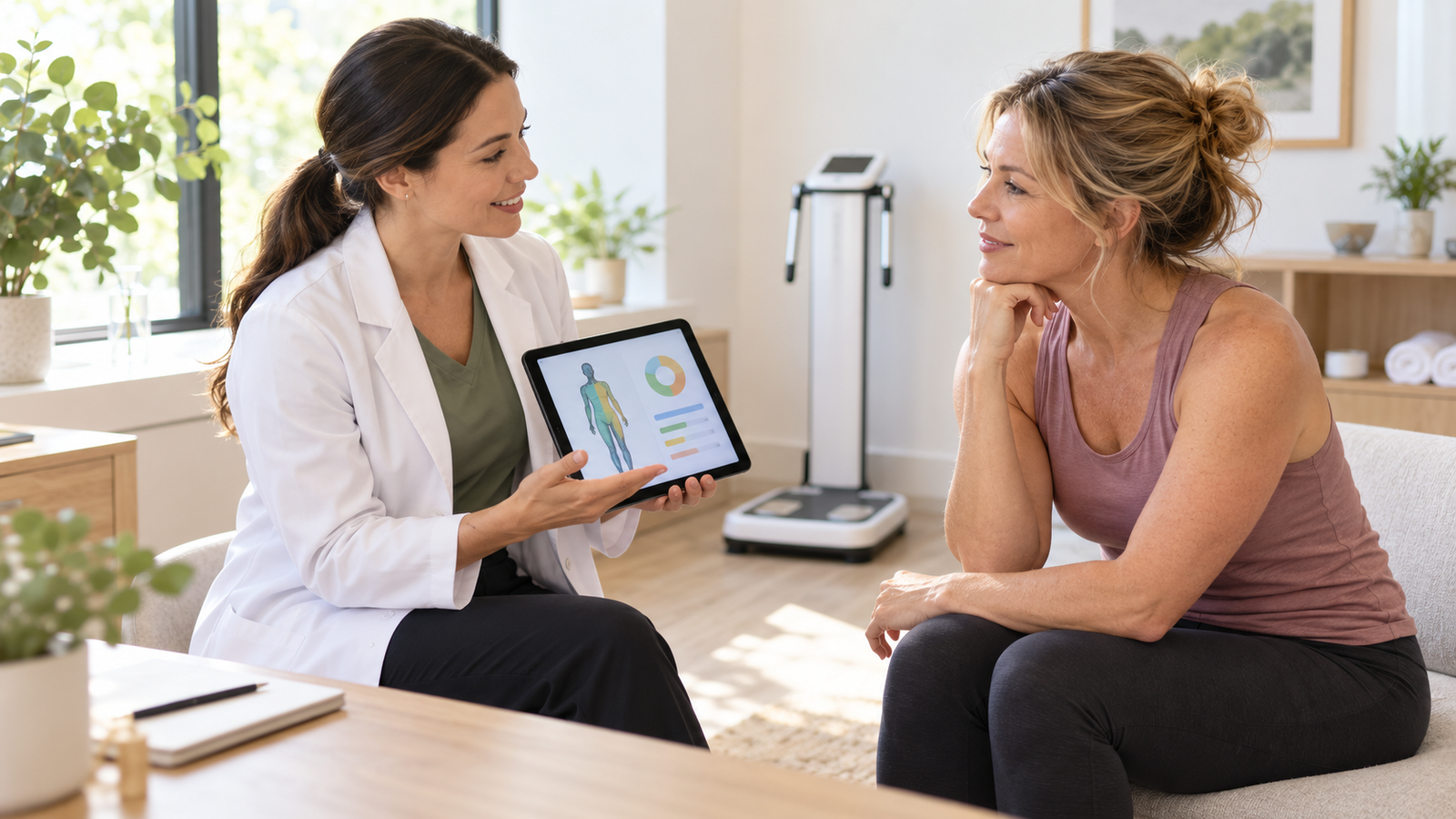
A body composition assessment can give you more information than body weight alone. Depending on the method, it may estimate measures such as body fat, fat-free mass or muscle mass. The numbers can be useful conversation starters, but they are estimates—not a diagnosis or a complete picture of health.
If you are considering a scan or body composition check, knowing what to expect can help you use the results calmly and ask better questions.
What happens during an assessment?
The exact process depends on the device and service. A common consumer method is bioelectrical impedance analysis (BIA): the device passes a very small electrical current through the body and uses the measured impedance, together with an equation, to estimate body composition. Some devices use foot contacts; others use both hands and feet. The report may show several estimates, and the provider should explain what each measure means for that specific device.
Other methods use different technologies and have different strengths, costs and limitations. Ask which method is being used and whether it is designed for general wellness tracking or clinical assessment.
Why one result should not be treated as the truth
BIA devices do not directly measure body fat or muscle tissue. They estimate these values from electrical measurements and device-specific prediction equations. A 2026 expert-endorsed review in The American Journal of Clinical Nutrition notes that accuracy depends on the device, its equations and the person being measured; individual-level error can be substantial.
Hydration, recent food or drink, exercise, time of day, body position and other conditions can influence readings. That does not make every scan useless. It does mean the fairest comparisons usually come from repeating the same device under similar conditions and interpreting the trend cautiously—not comparing numbers from different machines as if they were interchangeable.
How to get a more useful comparison
- Use the same device and follow its instructions each time.
- Try to measure at a similar time and under similar conditions.
- Ask how recent food, drink, exercise or hydration might affect that device’s reading.
- Record the date and relevant context rather than focusing on a single percentage.
- Discuss results alongside your goals, health history and other measures.
If a result surprises you, ask the provider to explain the method and its limits before changing your routine. A scan should support a conversation, not pressure you into a particular product or plan.
What a scan cannot tell you
A consumer body composition report cannot diagnose a health condition, identify why your weight has changed, or tell you exactly what action to take. It also cannot replace a medical evaluation. If you have a condition that affects fluid balance, are pregnant, have an implanted medical device, or have questions about whether a device is appropriate for you, ask a qualified healthcare professional or the device provider before testing.
Body weight and waist measurement can also be tracked in different ways, each with limits. Read how to measure your waist at home, and see what to bring to a weight-management consultation if you would like help discussing your goals.
Use information to guide the next question
The most useful assessment is one that leaves you clearer about what to do next. You might ask whether the measurement is repeatable, what changes are meaningful for that device, and whether your plan supports energy, strength and everyday wellbeing—not just a lower number.
If you would like a guided review of your routine, you can download the free 7-Day Metabolic Reset Guide. For individual health concerns, consult a qualified healthcare professional.
Source
- Methodological standards for body composition assessment: an expert-endorsed guide for research and clinical applications. The American Journal of Clinical Nutrition, 2026.




One thought on “What Does a Body Composition Assessment Actually Tell You?”