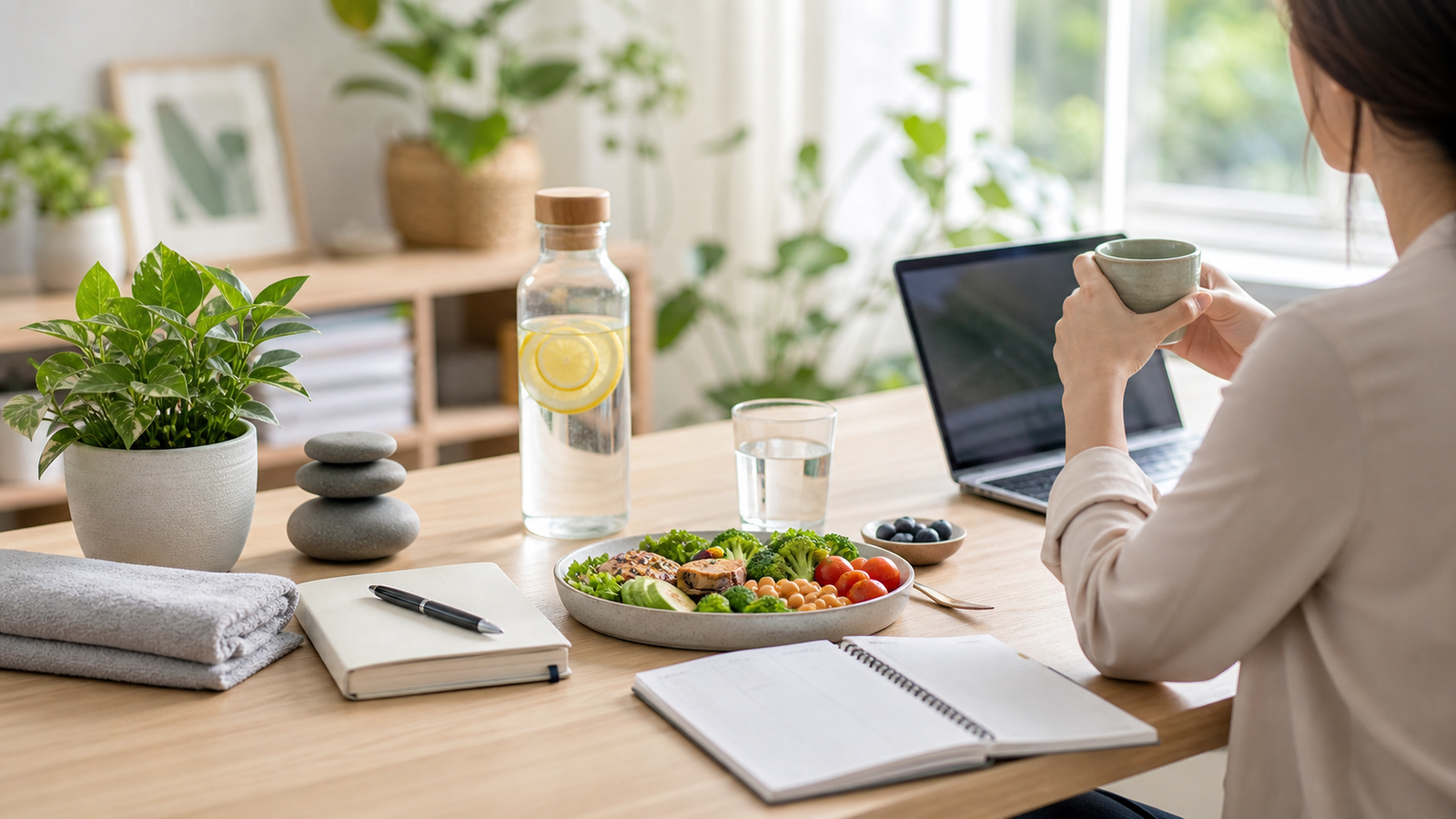
If you have ever tried to "eat better" but still felt tired, heavy, stressed, or stuck, you are not alone.
Many busy women start with food because it feels like the most obvious place to begin. Food matters. But weight management and metabolic wellness are rarely about food alone. Your workday, sleep, stress, movement, body awareness, and self-care routines can all shape how consistent you feel from Monday to Sunday.
This is why I like to look at wellness from two sides: inside-out and outside-in.
Inside-out wellness is about the habits that support your body from within, such as meals, protein, fibre, hydration, sleep, and metabolic awareness. Outside-in wellness is about how you care for the body you live in each day, especially when you feel tense, puffy, tired, stiff, or disconnected from your body after long hours of work.
Neither side needs to be extreme. The goal is not to do everything perfectly. The goal is to find the next practical starting point.
Why Diet Alone Can Feel So Frustrating
For many people, dieting becomes a cycle of trying harder, restricting more, and then feeling disappointed when life gets busy again. That can be especially frustrating when the real issue is not laziness or lack of willpower.
Sometimes the pattern looks like this:
- You skip breakfast or eat very little because the morning is rushed.
- By mid-afternoon, cravings feel louder.
- After work, your body feels heavy and tense.
- Dinner becomes the first proper pause of the day.
- At night, you promise to restart tomorrow.
That pattern is not a character flaw. It may simply mean your system needs more support throughout the day.
Consumer wellness trends have also been moving in this direction. People are paying attention not only to weight management, but also to functional nutrition, healthy aging, mindfulness, and in-person wellness support. That broader view matters because real daily wellness is usually built from several small supports, not one dramatic rule.
The Inside-Out Part: What Supports Your Body From Within
Inside-out habits are the basics that help your body feel more steady.
For a busy working woman, this may include:
- A protein-forward breakfast instead of only coffee and toast.
- Adding vegetables, beans, fruit, or whole grains for fibre.
- Drinking enough water before the late-afternoon slump arrives.
- Eating regular meals instead of saving most food for night.
- Checking body composition or habits instead of relying only on scale weight.
- Protecting sleep where possible, especially during stressful weeks.
None of these habits promises instant weight loss, and they should not be treated like punishment. They are supports. They make it easier to notice what your body is asking for.
For example, if cravings always appear around 4 pm, the useful question is not "Why do I have no discipline?" A better question is, "Did I give my body enough protein, fibre, fluids, and rest earlier today?"
That one question changes the tone. It moves you from blame into observation.
The Outside-In Part: What Your Body May Be Telling You
Outside-in care is often overlooked because it can sound less "serious" than diet. But for many busy adults, the body carries the workday.
Long sitting, screen time, stress, rushing between responsibilities, and poor recovery can all leave you feeling disconnected from your body. You may notice heaviness, tension, stiffness, low energy, or the feeling that you just want to collapse at the end of the day.
This is where gentle outside-in support can help you reconnect.
It may look like:
- A short walk after work.
- Gentle stretching for the neck, shoulders, hips, or legs.
- A warm shower and slower breathing before dinner.
- A body check-in instead of immediately reaching for snacks.
- A self-care appointment when your body feels constantly heavy or tense.
- Giving yourself 10 minutes to reset before serving everyone else.
The World Health Organization notes that physical activity supports both physical and mental health, yet many adults do not meet recommended activity levels. This does not mean you need to suddenly train hard every day. It can start with small, repeatable movement that fits your real life.
Outside-in care is not about "detoxing" the body or making medical claims. It is about body awareness, comfort, and consistency.
The Stress Link: Why Your Day Matters
Stress can affect eating patterns for some people. Research reviews have discussed how chronic stress and stress-related eating patterns may be relevant in weight management conversations.
In normal life, that may show up as:
- Wanting sweet drinks after a tense meeting.
- Eating quickly because you feel rushed.
- Snacking at night because the day felt emotionally heavy.
- Feeling too tired to prepare a balanced meal.
- Choosing comfort food because it feels like the only reward.
Again, this is not about blame. It is about noticing the pattern early enough to support yourself.
One useful habit is to ask: "What kind of support do I need before I decide what to eat?"
Sometimes the answer is food. Sometimes it is rest. Sometimes it is movement. Sometimes it is a conversation, a plan, or a body check-in.
A Simple Inside-Out / Outside-In Checklist
If you feel stuck, use this checklist before changing everything.
1. Food Support
Did I eat enough protein and fibre earlier in the day?
If not, start there. A practical meal does not need to be perfect. It can be eggs with fruit, Greek yogurt with nuts, tofu with rice and vegetables, yong tau foo with extra vegetables, or mixed rice with a clearer protein choice.
2. Energy Support
Am I tired because I am hungry, under-rested, dehydrated, or overloaded?
These can feel similar in the body. Before judging yourself, check the simple basics.
3. Movement Support
Have I moved my body today in a way that feels realistic?
This could be a walk, stairs, stretching, strength training, or a few minutes away from the desk. Small movement is still useful when it is repeatable.
4. Body Awareness Support
Am I only looking at weight, or am I also noticing body composition, energy, strength, cravings, sleep, and consistency?
Scale weight is one data point. It is not the full story of your body.
5. Self-Care Support
Does my body feel heavy, tense, puffy, or constantly tired?
If yes, the next step may not be stricter dieting. It may be a better recovery rhythm, gentler movement, or outside-in body care that helps you reconnect with how your body feels.
Where Should You Start?
If your meals are inconsistent, start with inside-out support: protein, fibre, water, and regular eating.
If your body feels heavy and tense after work, start with outside-in support: walking, stretching, breathing, and body care.
If you feel confused because you have tried many things, start with clarity: a body check-in, habit review, or consultation.
The best starting point is not the most dramatic one. It is the one you can repeat.
A Gentle Reminder
Weight management is not just diet. It is also how you sleep, move, handle stress, listen to your body, and care for yourself through busy seasons.
You do not need to punish your body into change. You can support it from the inside out and the outside in.
If you want a simple place to begin, download the free 7-Day Metabolic Reset Guide at https://vernlai.com/reset. It is a practical starting point for building steadier habits without shame or all-or-nothing dieting.
This article is for general education only and is not medical advice. If you are managing a medical condition, symptoms, medication, or major lifestyle changes, speak with your healthcare professional for personal guidance.
- McKinsey & Company. The Future of Wellness trends survey 2025. https://www.mckinsey.com/industries/consumer-packaged-goods/our-insights/future-of-wellness-trends
- World Health Organization. Physical activity fact sheet. https://www.who.int/news-room/fact-sheets/detail/physical-activity
- National Library of Medicine / PMC. Obesity, Chronic Stress, and Stress Reduction. https://pmc.ncbi.nlm.nih.gov/articles/PMC10746495/