Eating more colourful plant foods sounds simple until Sunday becomes a production line of containers, recipes and vegetables you are no longer excited to eat by Thursday.
You do not need to prepare seven perfect menus to create more variety next week.
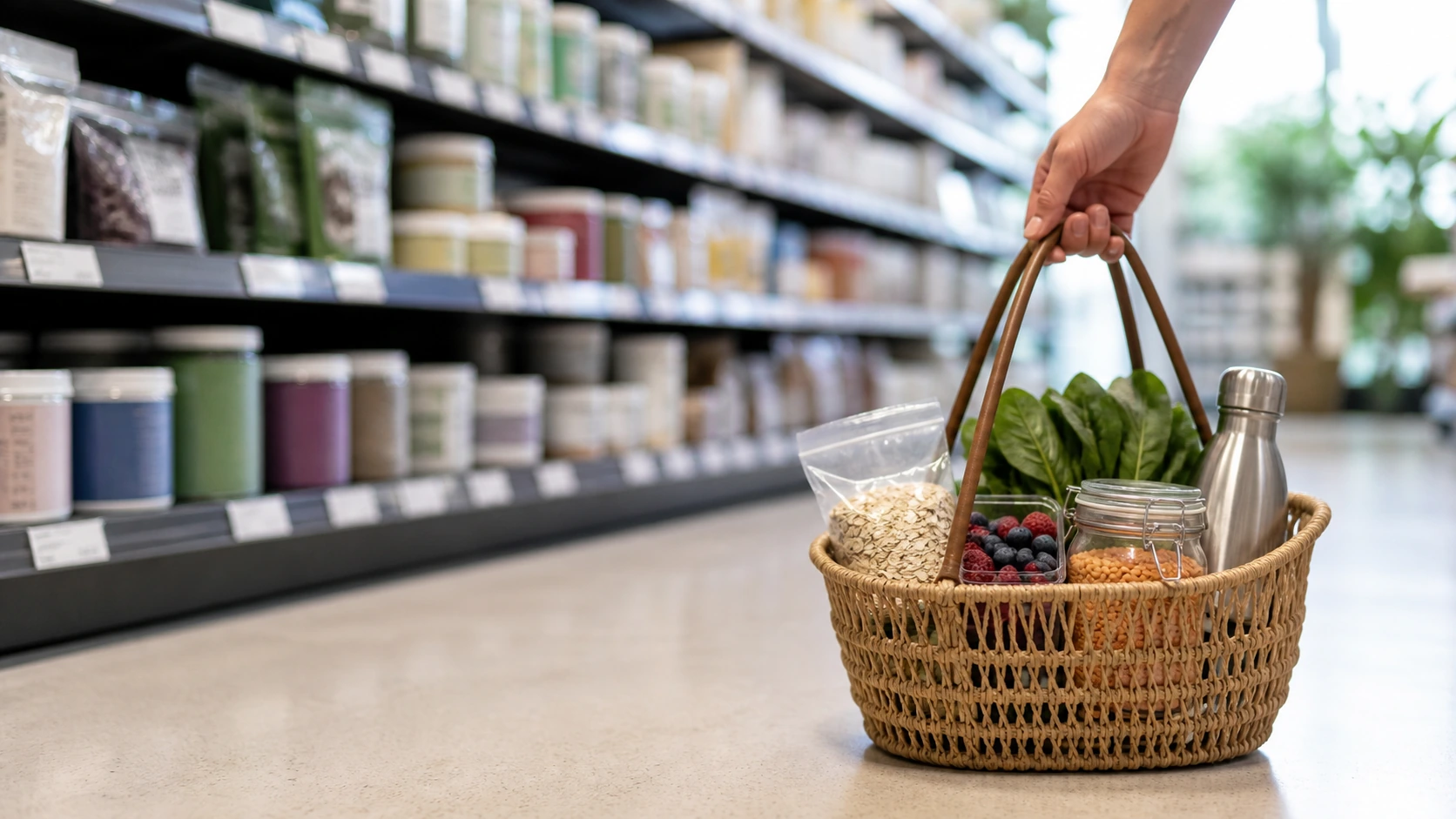
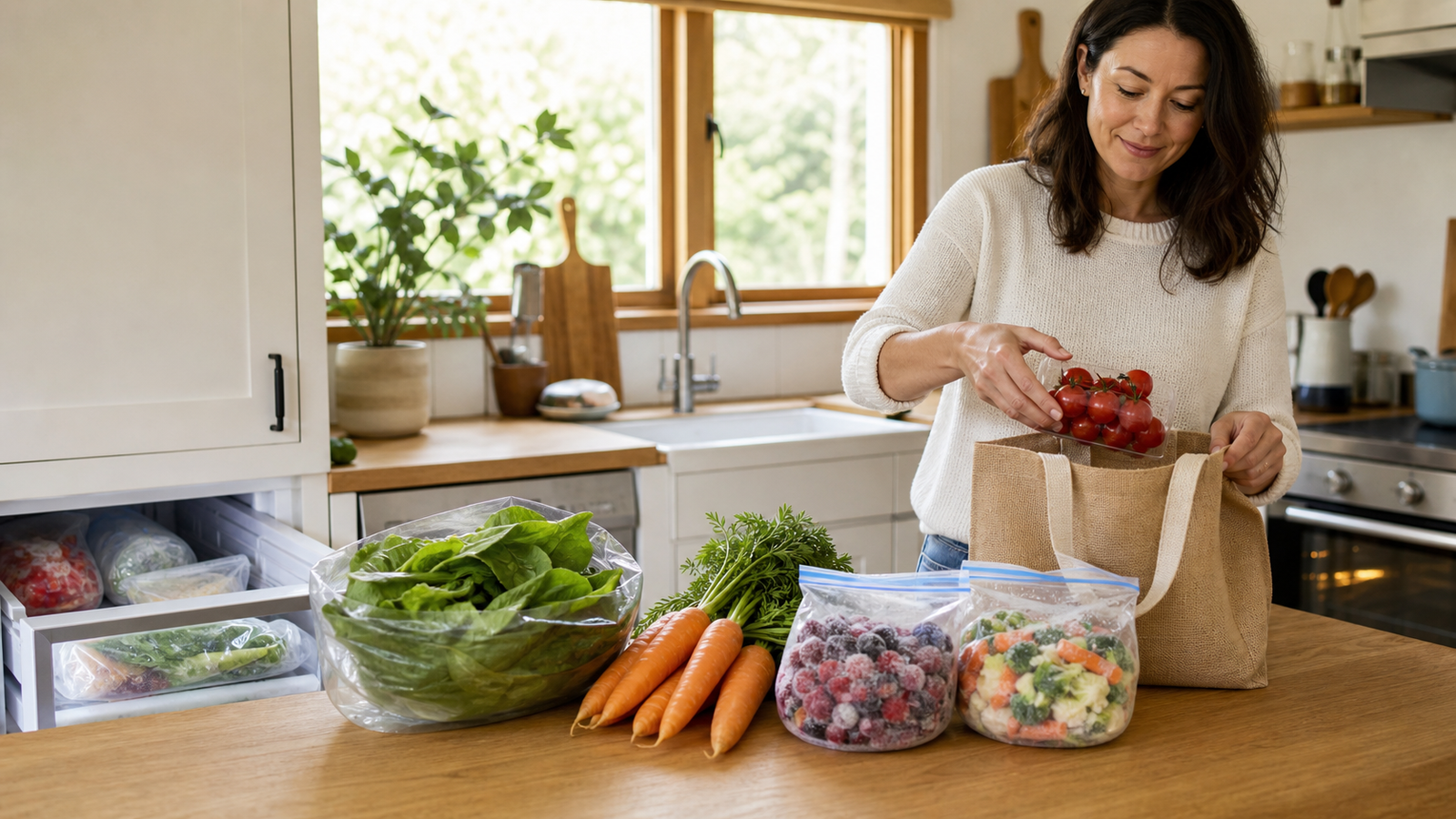
A smaller plan can work: buy five low-preparation items, decide where each one is likely to be used and attach them to meals you already eat. For this week, try washed leafy greens, cherry tomatoes, carrots, frozen mixed berries and frozen mixed vegetables.
The goal is not a rainbow at every meal. It is to make several colourful choices easier when the week becomes busy.
Why big meal-prep plans often become tiring
A complicated plan asks you to predict your energy, appetite, schedule and social life several days in advance. When the week changes, carefully prepared food may be left behind.
Then the problem can feel like a lack of discipline. Often, the plan simply required too many decisions and too much maintenance.
This Sunday reset uses a different approach. Instead of preparing every meal, you prepare the environment. Five versatile foods become available for quick additions, substitutions and snacks.
Specific planning can also help close the gap between intention and action. A 2026 systematic review and meta-analysis examined "if-then" plans for increasing fruit and vegetable intake in adults. The approach links a situation with a chosen response: if a predictable moment happens, then I will take a specific action.
That is more useful than the vague goal, "I should eat more vegetables."
Item 1: Washed leafy greens
Choose a leafy green you will genuinely eat, such as spinach, lettuce, rocket or a mixed bag. A washed option removes one preparation step.
Give it at least two possible jobs:
- add a handful to eggs, a sandwich or a wrap;
- place it beside a ready-made meal;
- stir it into soup, pasta or a hot grain bowl;
- use it as the base for leftovers rather than building a separate salad.
Your if-then plan might be: "If I make eggs or a sandwich, then I will add a handful of greens."
Leafy greens are perishable, so avoid buying a large amount simply because it looks economical. Buy the quantity that matches the meals you can realistically name.
Item 2: Cherry tomatoes
Cherry tomatoes require little preparation and can move between breakfast, lunch and dinner.
Try them:
- beside toast, eggs or cottage cheese;
- inside a lunchbox with a familiar sandwich;
- stirred into pasta or a grain dish;
- roasted with a quick evening meal;
- eaten with hummus or another dip.
Your if-then plan could be: "If lunch has no vegetable, then I will add a handful of cherry tomatoes."
This is not about making the meal photogenic. It is about having a red plant food ready when cooking feels unlikely.
Item 3: Carrots
Whole carrots last well, while baby carrots or pre-cut sticks reduce preparation. Choose the version that fits your budget and the amount of effort you will actually make.
Carrots can be:
- eaten with a snack or dip;
- grated into a sandwich or wrap;
- added to soup, curry or a tray bake;
- microwaved or steamed beside dinner;
- packed with lunch without needing a recipe.
A useful plan is: "If I want something crunchy in the afternoon, then I will try carrots with a food that makes the snack satisfying."
That final part matters. A vegetable does not need to replace enough food. Pair it with something suitable, such as yoghurt, hummus, cheese, nuts or part of a normal meal.
Item 4: Frozen mixed berries
Frozen berries remove the pressure to finish a fresh punnet within a few days. They are useful when you want fruit available without depending on perfect timing.
Use them:
- stirred into oats;
- added to yoghurt;
- thawed as a topping;
- blended into a smoothie that is part of an adequate breakfast;
- warmed gently with a simple dessert.
Try: "If I prepare oats or yoghurt, then I will add frozen berries."
Frozen berries do not have to become a special antioxidant recipe. Their value here is convenience and variety.
Item 5: Frozen mixed vegetables
This is the backup for the evening when your original plan disappears.
Frozen vegetables can be:
- microwaved beside a ready-made meal;
- stirred into rice, noodles or pasta;
- added to soup;
- cooked with eggs or tofu;
- mixed into leftovers to increase volume and variety.
Your plan might be: "If dinner is a quick convenience meal, then I will add a portion of frozen vegetables when practical."
Fresh, frozen and canned vegetables can all contribute to variety. Check labels where relevant and choose forms that fit your needs, budget and storage.
Assign every item a likely moment
Before leaving the shop or confirming an online order, finish this sentence for each item:
"I will probably use this with…"
Your answers might be:
- greens with Tuesday’s sandwich;
- tomatoes with two lunches;
- carrots for afternoon snacks;
- berries with breakfast;
- frozen vegetables with the busiest dinner.
If you cannot name a likely moment, buy a smaller amount or leave the item for another week. Variety does not improve when food is forgotten and thrown away.
Keep the plan flexible
You do not have to eat all five foods every day. You do not need to count colours or force a vegetable into a meal when it does not fit.
The five-item shop is a support system, not a scorecard.
If your schedule changes, move the food to another meal. Freeze what can be frozen. Cook the greens before they wilt. Use tomatoes in a hot dish. Let the frozen items wait for the week when you need them.
This is what sustainable planning often looks like: fewer promises, more useful options.
Your ten-minute Sunday reset
Before the week begins:
1. Add the five items to your shopping list.
2. Choose one likely meal or snack for each.
3. Write two if-then plans for your busiest moments.
4. Put the most perishable food where you will see it.
5. Keep frozen options available for changes in schedule.
Then stop. You do not need to spend the rest of Sunday preparing food.
The takeaway
Eating more colour does not require a perfect meal-prep routine. A washed green, an easy red vegetable, a durable orange option and two frozen backups can create several opportunities across the week.
Plan the moment, not every meal. Make the next useful choice easier, then leave enough flexibility for real life.
If you want a simple structure for building steadier habits across the week, download Vern Lai’s free 7-Day Metabolic Reset Guide at https://vernlai.com/reset.
This article provides general wellness education, not individual medical or nutritional advice.
- Melum SK, Martiny-Huenger T. “A systematic review and meta-analysis on the effectiveness of if-then plans to facilitate fruit and vegetable consumption in adults.” International Journal of Behavioral Nutrition and Physical Activity, 2026. https://pubmed.ncbi.nlm.nih.gov/41987207/
- US Department of Agriculture. “MyPlate Vegetable Group.” https://www.myplate.gov/eat-healthy/vegetables
- US Department of Agriculture. “MyPlate Fruit Group.” https://www.myplate.gov/eat-healthy/fruits