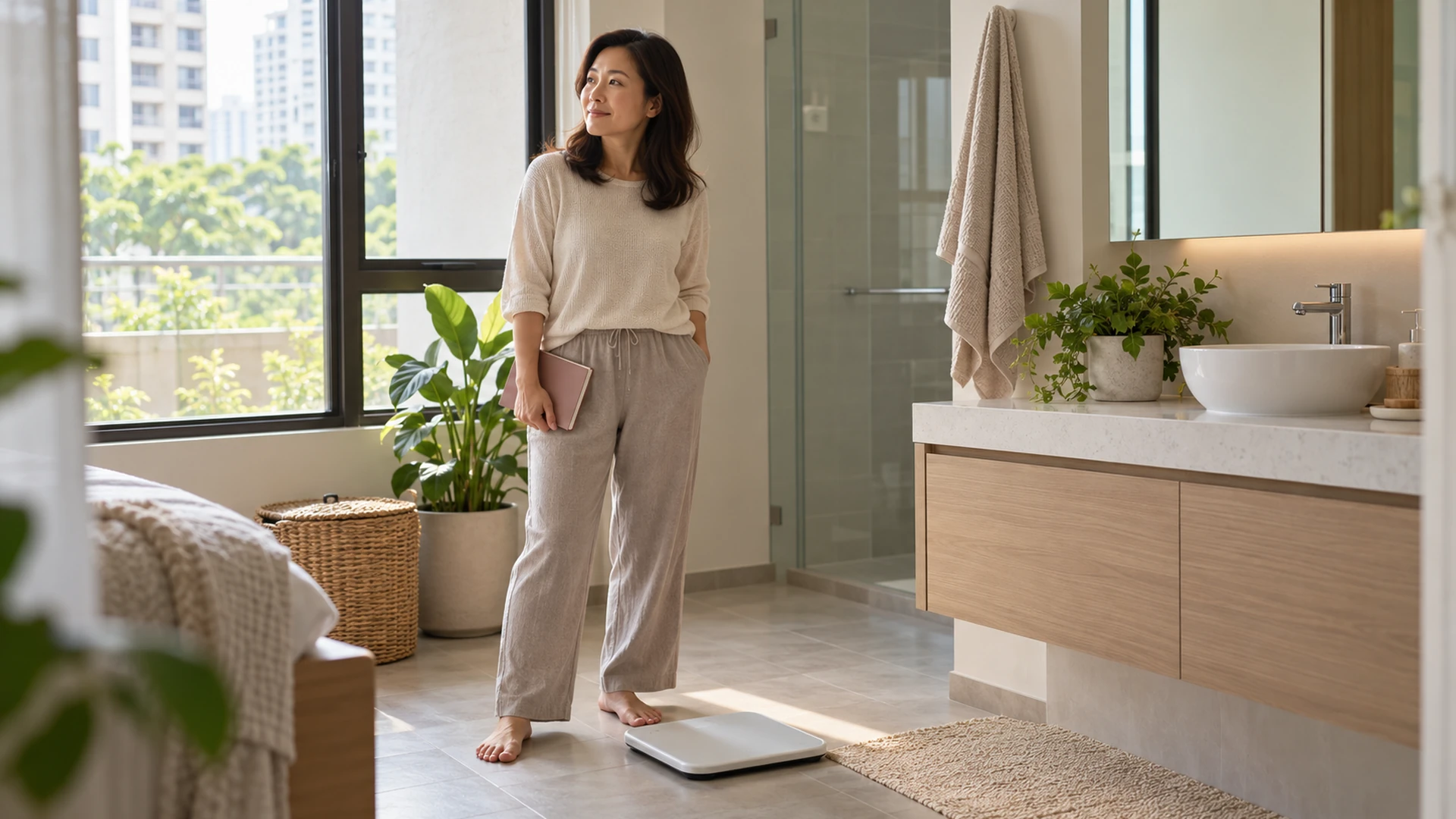
You take the longer route to the station, walk during lunch and check your steps before bed. Movement is already part of your day. But when someone suggests strength training, you picture a crowded gym, heavy weights and another commitment you do not have room for.
Surely all that walking should count?
It does. Walking is worth keeping, and brisk walking can contribute to your aerobic activity needs. Strength training adds something different: deliberately challenging your muscles against resistance. For most adults, including women over 40, a rounded routine includes both. You do not need to give up walking or become a gym enthusiast to begin.
What walking does, and what it leaves out
A walk can be transport, a break from your desk or time with someone you enjoy. Those are good reasons to keep doing it, even before you look at a step total.
For aerobic fitness, effort matters as well as movement. The US Centers for Disease Control and Prevention describes moderate activity as an effort at which you can talk but would struggle to sing. A brisk walk may fit that description; a gentle stroll may not. Both can have a place in your day.
The CDC recommends at least 150 minutes of moderate aerobic activity weekly, or an equivalent amount of vigorous activity, plus muscle-strengthening activity on at least two days. Strength work should involve the major muscle groups, including the legs, hips, back, chest, abdomen, shoulders and arms.
Ordinary walking does not cover that whole strengthening requirement. Your legs are moving, but your chest and arms are not necessarily being challenged in the way they would be when pushing or lifting resistance.
Rather than asking whether your steps are enough for everything, ask what your current routine includes and what it could usefully add.
Why think about strength after 40?
Strength is relevant to ordinary tasks: getting up from a low seat, carrying shopping or lifting something onto a shelf. A difficult task does not diagnose muscle loss, but it can prompt you to think beyond a daily step target.
There is no special birthday when everyone suddenly needs the same workout. Your starting point depends on what you already do, your health and what feels manageable.
Research does show that women in midlife can improve strength. In a 2023 study, 31 women completed a programme that included ten weeks of twice-weekly resistance training after a control period. Squat and bench-press strength improved across the training groups, while muscle-size and body-composition changes were less consistent, particularly after menopause.
It was a small study, not a guarantee of what your own routine will achieve. Its useful lesson is that getting stronger and visibly changing your body are different outcomes. An exercise can become easier before your clothes fit differently or your weight changes.
That gives you another way to recognise progress without judging every session by the scale.
Strength training does not have to start with a gym membership
Resistance can come from your own body weight, a resistance band, free weights or a machine. The useful question is whether the activity challenges the muscles you intend to work, at a level you can control.
For someone starting gently, the NHS includes sit-to-stand movements and wall press-ups among its home strength exercises. These are examples of an entry point, not a complete programme for every reader. Someone already comfortable with them may need a different challenge.
If you are unsure where to begin, an introductory session with a suitably qualified exercise professional can help you choose movements, learn technique and understand how to progress. Bring a practical request: “I walk regularly, but I would like a simple strength routine I can fit around work.”
You do not need to arrive knowing exercise names or owning equipment. It is reasonable to ask for something you can repeat at home, and for alternatives to movements that do not suit you.
Give it a place in your actual week
The awkward part may be finding space for an unfamiliar habit. “I should do some weights” can sit on the same mental list as clearing your inbox and sorting the cupboard.
Choose two realistic opportunities instead. Perhaps Tuesday before your shower and Saturday before the household gets busy. Those are planning examples, not a prescribed training schedule. The point is to decide where learning and practising could happen.
For your first session, success might mean learning a few movements properly rather than completing an ambitious workout. Start at a manageable level and build gradually. NHS guidance recommends increasing the challenge over time rather than doing too much at the beginning.
Keep a brief note of what you did and how it felt. That gives you something concrete to discuss with an instructor: a movement has become comfortable, a weight feels difficult to control, or a particular exercise needs adjusting.
Walking can stay in its familiar place. You might still walk with a friend after dinner while giving strength work its own short appointment elsewhere in the week.
What if you are also trying to lose weight?
It is understandable to want each new habit to show up on the scale. But a strength session does not need to produce an immediate weight change to have a purpose. Assess the skill you are learning and the strength you are developing as well.
Avoid turning this into a shopping project. You can decide how you will train before considering specialist products. If your meals are another area you want to review, the article on checking your protein at breakfast offers a separate practical starting point.
If you already train and are wondering about supplements, this guide to creatine for women over 40 explores that different decision. Buying something is not a prerequisite for learning a movement.
Your next step can stay small
Keep the walks you enjoy. Choose a realistic opportunity to learn suitable strength exercises, and build from your current ability.
If you have an injury, ongoing pain, a health condition or uncertainty about which exercises are suitable, seek individual advice before starting. Stop if an exercise causes pain or makes you feel unwell. General guidance cannot assess those concerns for you.
You do not have to become a different kind of person to make room for strength. You can be someone who enjoys walking and is learning another way to look after her body.
For a simple way to review how meals, movement and daily habits fit together, download Vern Lai’s free 7-Day Metabolic Reset Guide.
- Adult Activity: An Overview. Centers for Disease Control and Prevention, 20 December 2023.
- What Counts as Physical Activity for Adults. Centers for Disease Control and Prevention, 6 December 2023.
- Isenmann E, et al. Resistance training alters body composition in middle-aged women depending on menopause: A 20-week control trial. BMC Women’s Health, 6 October 2023.
- Strength exercises. NHS.
- How to improve your strength and flexibility. NHS.