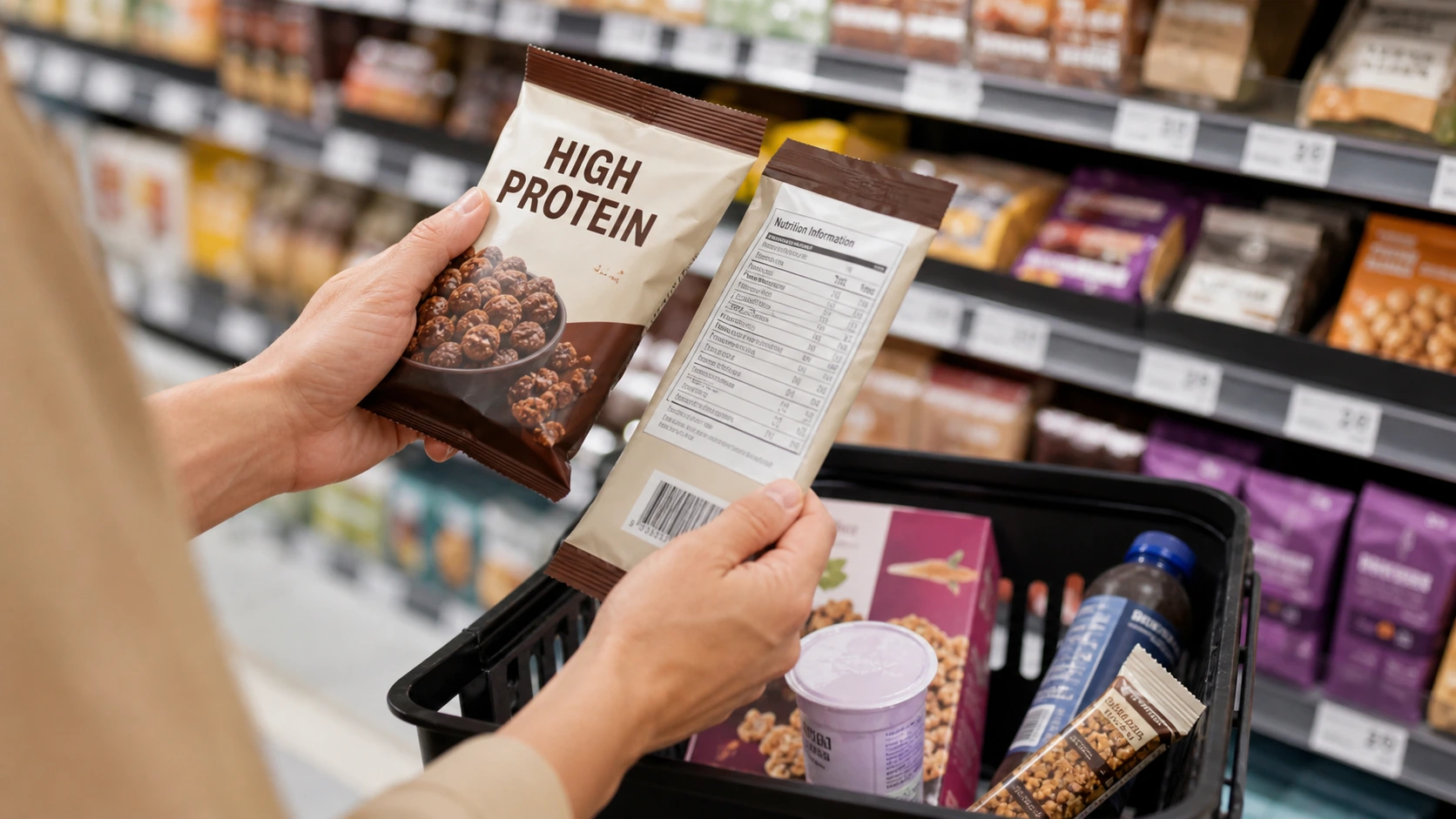
If you eat a meal that looks healthy but feel hungry again an hour later, it may not be a willpower issue. The meal may simply be missing two anchors: protein and fibre.
For busy adults, food decisions often happen quickly. Breakfast is rushed. Lunch is squeezed between meetings. Dinner happens when everyone is tired. In that kind of life, the goal is not a perfect diet. The goal is a repeatable plate that helps you feel more steady.
Why Protein and Fibre Work Well Together
Protein helps make meals more satisfying. Fibre adds bulk, texture, and slower digestion. Together, they can make a meal feel more complete.
The Dietary Guidelines for Americans emphasize nutrient-dense eating patterns across food groups. Harvard Nutrition Source also points out that protein does not come alone; the full "protein package" matters because foods bring fibre, fats, sodium, and other nutrients with them.
This is why the question is not only, "Did I eat protein?" It is also, "What came with it?"
A plate with protein but almost no fibre may still leave you looking for snacks. A plate with fibre but too little protein may not keep you full enough. The combination is often more practical than either one alone.
The Simple Plate Formula
Try this:
1. Pick one protein anchor.
2. Add one fibre anchor.
3. Include colour or vegetables where possible.
4. Keep the meal realistic for your day.
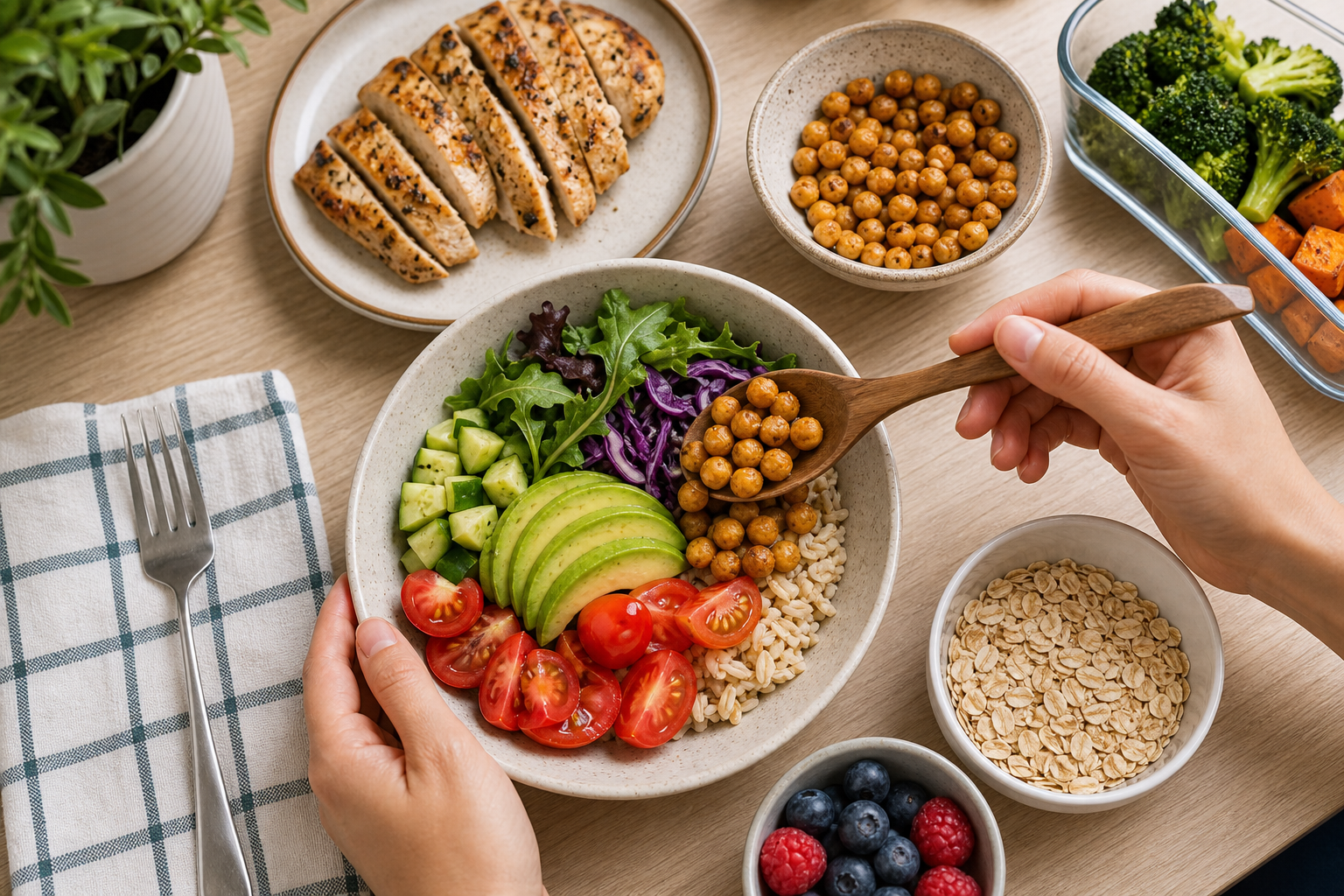
Protein anchors can include eggs, fish, chicken, tofu, tempeh, Greek yogurt, beans, lentils, lean meats, dairy, or soy-based options.
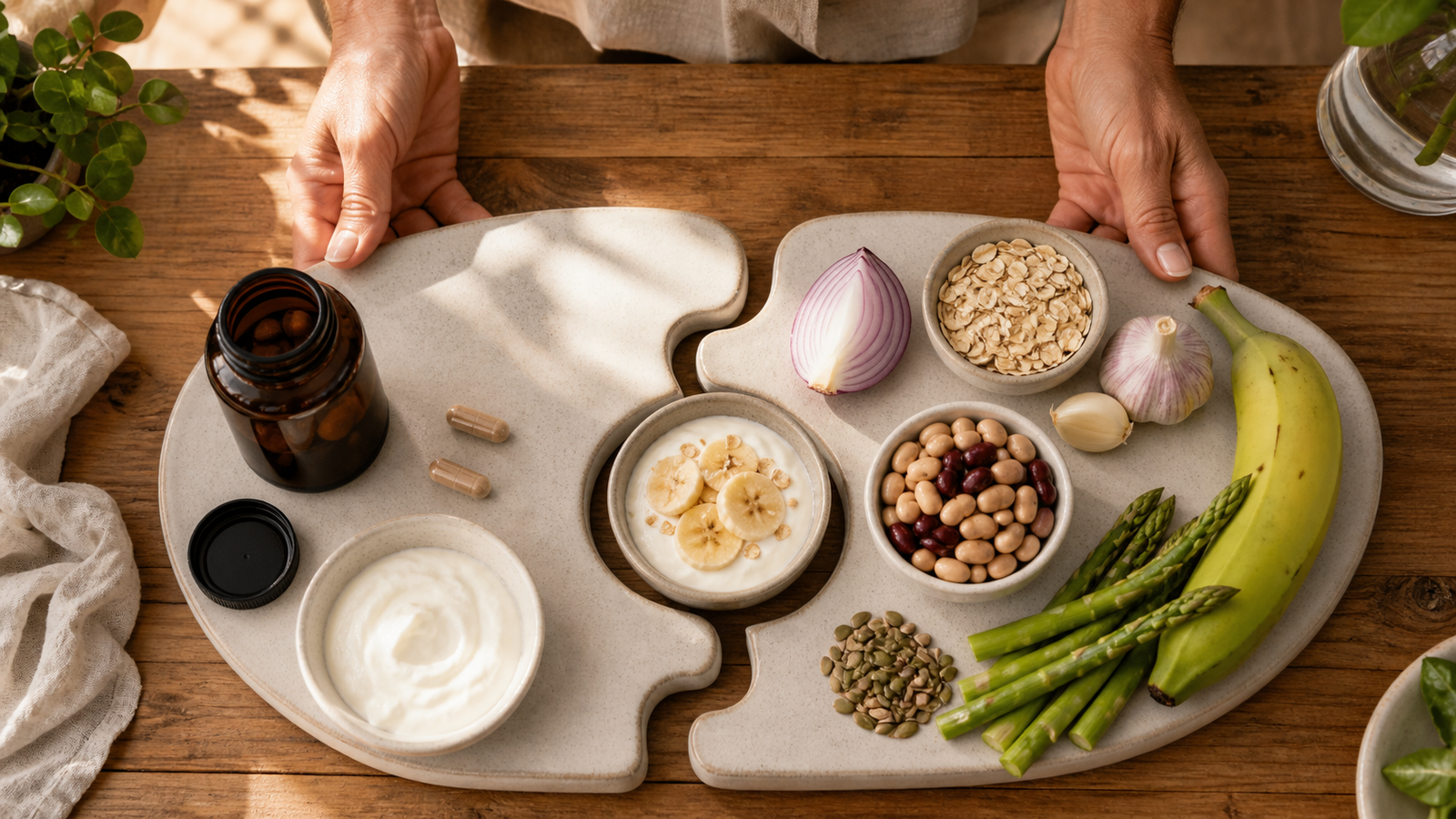
Fibre anchors can include vegetables, beans, lentils, oats, fruit, whole grains, chia seeds, or other high-fibre plant foods.
You do not need to overhaul everything at once. Start by improving one meal.
Local Meal Examples
This can work with familiar meals.
For economical rice or mixed rice, you might choose one clear protein, add an extra vegetable, and go easier on heavy sauces.
For noodles, you might add tofu, egg, fish slices, chicken, or more vegetables where available.
For breakfast, you might pair eggs or Greek yogurt with fruit or oats instead of relying only on toast or coffee.
For a busy lunch, you might build around a protein bowl with vegetables and a fibre-rich carbohydrate.
None of this requires labelling foods as bad. It is about making the meal work harder for you.
What to Notice
After a protein-and-fibre meal, notice:
- How long you feel comfortably full.
- Whether afternoon cravings are softer.
- Whether you feel steadier at work.
- Whether snacking becomes more intentional.
- Whether the meal is easy enough to repeat.
This is body feedback. It helps you learn what your routine needs.
A Gentle Starting Point
Choose one meal tomorrow and ask:
"Do I have both protein and fibre here?"
If not, add one missing anchor. Keep it practical, not perfect.
For a structured place to begin, download Vern Lai’s 7-Day Metabolic Reset Guide at https://vernlai.com/reset.
Sources
- Dietary Guidelines for Americans, 2020-2025. https://pmc.ncbi.nlm.nih.gov/articles/PMC8713704/
- Harvard T.H. Chan School of Public Health, The Nutrition Source. Dietary Guidelines commentary. https://nutritionsource.hsph.harvard.edu/2026/01/09/dietary-guidelines-for-americans-2025-2030/